Latest news, announcements, and media resources from Hydrology University.
Featured Video Briefings
The Future of Drinking Water
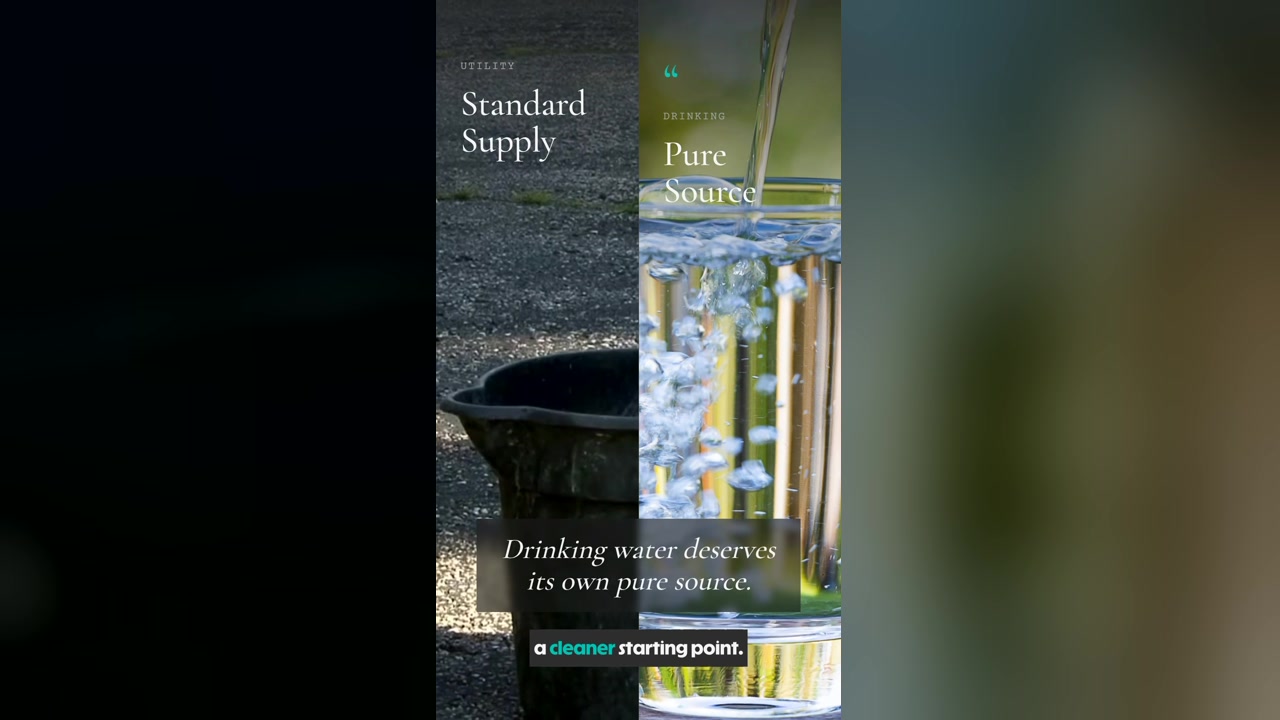
A 97-second visual briefing exploring industrial impacts on traditional water sources and why evaluating high-tech barriers like atmospheric water generation matters today.
Selected research and water-technology updates from the Hydrology University editorial desk.
Contaminants · Current News · Research · Nanoplastics · Membrane Filtration·Oct 4, 2026
Real-Time LIBD Tracks Nanoplastics Deposition on Nanofiltration Membranes
A bench-scale Water Research study uses LIBD to count nanoplastic deposition and release on nanofiltration membranes in real time. An engineering measurement advance, not a consumer product claim.
Contaminants · Current News · Research · Microplastics·Oct 3, 2026
Mouse Study Tracks Microplastics Into Liver Immune Cells
A mouse study tracked size-dependent plastic accumulation in liver immune cells and changes in fat storage. It does not establish effects or health risks in people.
Current News · Treatment Science · Microplastics·Sep 29, 2026
A 3D-Printed Filter Caught Up to 90% of Microplastics in Waterloo Tests
University of Waterloo engineers stacked 3D-printed disk filters with tiny pores and a sticky coating, and the tallest stack removed up to 90% of microplastics in their tests.
Researchers at the University of Waterloo have developed a low-cost, customizable filter built from stacked 3D-printed disks made of PLA, a biodegradable polymer. The disks are printed with an offset grid that forces water to flow through them. A water-soluble additive is washed out after printing to leave nano- and micro-scale pores, and a thin pressure-sensitive adhesive coating helps hold particles.
The team tested stacks of 8 to 20 disks. With 20 disks, the column removed 90% of microplastics. Larger particles were captured almost completely, while particles smaller than 10 micrometres were harder to trap. The university says catching that remaining fraction is the next step.
Why it matters: the researchers note that common methods such as activated carbon are only partly effective against microplastics. This filter is still a research design, not a commercial product.
Current News · Regulation · Microplastics·Sep 28, 2026
Lawmakers Ask GAO to Review EPA's Microplastics Work
Twenty-four members of Congress want an accounting of EPA's micro- and nanoplastics research after the agency's proposed national monitoring rule left microplastics out.
On September 28, 2026, 24 members of Congress, led by Representatives Raja Krishnamoorthi, Janelle Bynum and Bonnie Watson Coleman, asked the Government Accountability Office (GAO) to review the Environmental Protection Agency's work on micro- and nanoplastics since fiscal year 2023.
The request follows two EPA steps. In April 2026, EPA placed microplastics on its draft sixth Contaminant Candidate List, a list of contaminants that may need future drinking-water regulation. In July, its proposed sixth Unregulated Contaminant Monitoring Rule (UCMR 6) left microplastics off the list of 30 contaminants that public water systems would have to monitor, even though seven governors had petitioned for them. EPA said no validated drinking-water test method for microplastics exists yet.
The lawmakers ask GAO to document EPA's research, methods, monitoring and risk-assessment work, how much of its 2023–2026 research plan has been completed, and what constraints the agency faces.
Why it matters: national monitoring data depends on reliable test methods. The letter does not set a standard or require testing, and GAO has not issued findings.
India Court Keeps Micro/Nanoplastics Warning-Label Order for Bottled Water, Sugar and Salt
On September 28, 2026, the Madras High Court in India dismissed a petition from the Food Safety and Standards Authority of India (FSSAI) asking it to review an earlier order on plastic packaging. That February 6, 2026 order directed FSSAI to issue a notification requiring drinking water, sugar and salt sold in plastic bottles and packets to carry a warning in bold red letters: “This water/sugar/salt may contain micro/nano plastics.” A special Division Bench of Justices N. Sathish Kumar and D. Bharatha Chakravarthy said the court had not concluded that these products become unsafe because of plastic packaging. It had ordered the warning so consumers could make an informed decision before consumption. FSSAI had argued that research on the health effects of micro- and nanoplastics is inconclusive and still at an early stage, and that the warnings could cause public panic and disrupt supply chains. It also said no country has yet regulated micro- and nanoplastics this way, and that it has asked the Indian Council of Medical Research to study the issue.
Why it matters: the ruling shows one way a court has handled consumer information about micro- and nanoplastics while research on their health effects continues.
Farm Soils Across Europe Are Loaded With Microplastics That Hitchhike Toxins
The EU-funded MINAGRIS consortium reports microplastics in every one of 227 tested agricultural fields across 11 European countries. Researchers describe a “Trojan horse” effect: smaller particles can adsorb pollutants, pesticides, microbes, and DNA — creating plastisphere hotspots where antibiotic-resistance genes may concentrate. Soft soil / food-chain literacy — not a drinking-water MCL claim. Coverage: The Guardian (Pippa Neill), Sep 16, 2026. Parallel findings flagged: earthworm / nutrient-cycle impacts; reduced lettuce leaf area and biomass at higher loads (worse with drought); biodegradable plastics are not automatically safer once fragmented. Policy asks cited: standardized plastic monitoring, manufacturer transparency, and risk assessments that treat plastics as co-pollutants. Optional soft nod: atmospheric / source literacy at WaterVO sits beside soil-to-water pathway conversations — AWG does not remediate farm soils.
Catchment and soil-literacy context from Hydrology University. Soft claims only — association / exposure pathways / co-pollutant framing; not proven human disease causation; not an EPA MCL.
Heavy Rain Can Supercharge Microplastic Pulses in Rivers, Science Study Finds
Qin and colleagues report in Science (DOI 10.1126/science.aeb4487; published around September 10, 2026) that hydroclimatic “pulse enrichment” can amplify riverine microplastic export. Their machine-learning framework harmonizes field methods and tracks daily rainfall and flow, identifying short-lived spikes as storms flush plastics from land and resuspend bed particles. Coverage cites an estimated 263,000 metric tons exported to oceans in 2022, about 96% from the Global South. Extreme rainfall could intensify these pulses without stronger upstream waste controls. The practical frame is source water: storm-driven loads arrive before treatment, making upstream hydrology and waste controls central to the discussion.
Source-water and climate-hydrology context from WaterVO.
Spout Monolith Is Back — Limited-Time Pricing at WaterVO
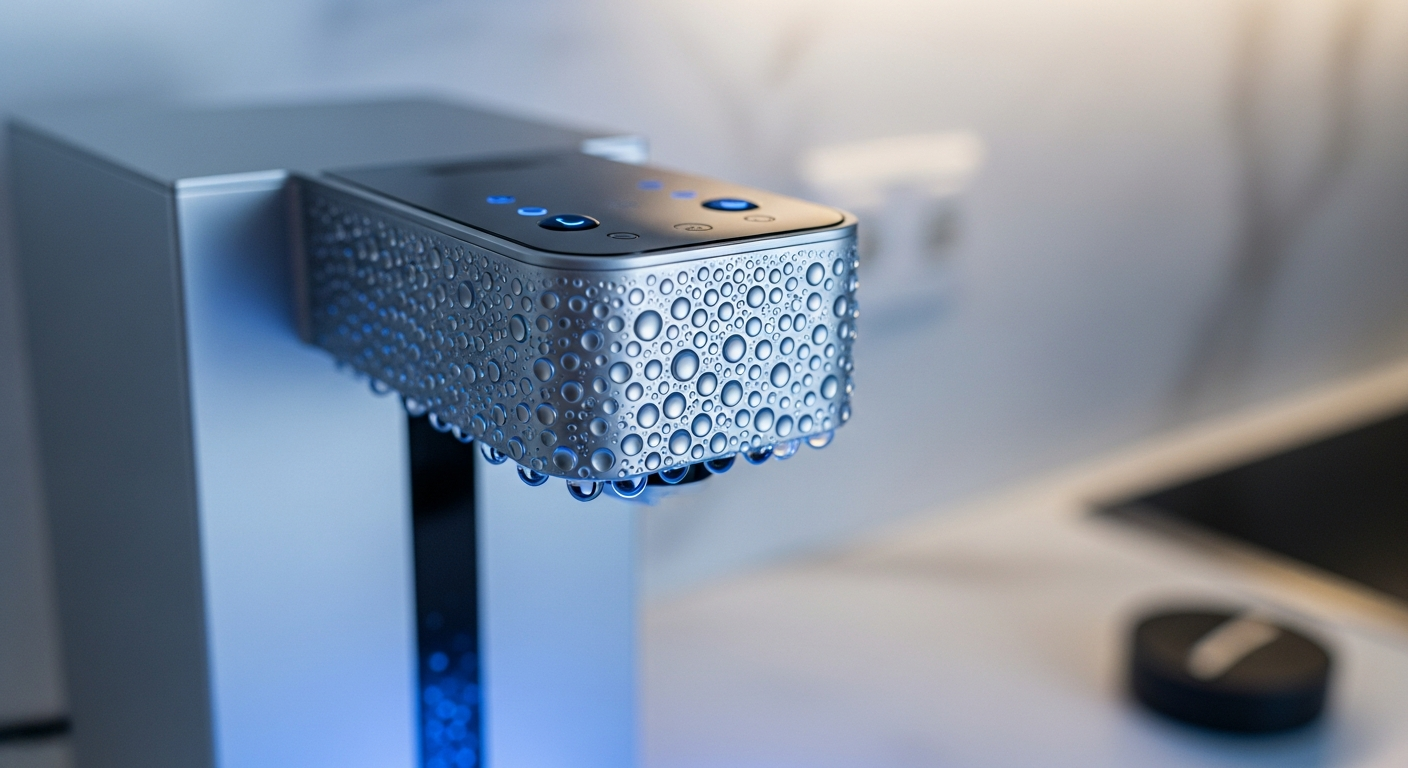
Spout Monolith atmospheric water is available again through WaterVO for a limited-time price of $1,495 (regularly $1,995). WaterVO provides the current pricing, after-sale support, and warranty information.
Source Matters: Airborne vs Waterborne Drinking Water
Drinking water is not just filtered or not — source matters. Waterborne cycles carry runoff, pesticide and glyphosate concerns, pharmaceuticals, nanoplastics, heavy metals, and a moving target of new chemicals. Vapor optimizing pulls moisture from air (HEPA → condense → filter → UV). Soft educational framing only; no disease claims. Explore Hydrology University, then Spout Monolith at WaterVO.
Soft educational framing from Hydrology University / WaterVO.
Fresh coverage of drinking-water quality, contamination, and treatment technology, pulled automatically from trusted news sources. Updated throughout the day.
Loading the latest water news…
In the News — As Referenced In
Our reviews and reports are grounded in current events, regulatory updates, and peer-reviewed research. Here's the coverage behind each outlet that references our work — with links to read the source directly.
Federal drinking-water standards, PFAS limits, and enforcement updates straight from the U.S. Environmental Protection Agency.
EPA Newsroom•February 5, 2026
EPA Maintains PFOA/PFOS Limits at 4 ppt, Extends Compliance Deadline to 2031
The EPA confirmed Maximum Contaminant Levels for PFOA and PFOS will remain at 4 parts per trillion while extending the compliance deadline for public water systems to 2031. A federal exemption framework is expected by Spring 2026.
Peer-reviewed water science — the latest research on contaminants, health effects, and treatment technology.
Nature Water•December 1, 2025
New Study Links Microplastics in Drinking Water to Cardiovascular Risks
Researchers from Columbia University found that microplastic particles in drinking water may contribute to arterial plaque formation, adding urgency to the case for advanced home filtration systems.
Market and industry intelligence on water technology, from atmospheric water generators to home filtration.
Globe Newswire•January 22, 2026
Global Atmospheric Water Generator Market Projected to Reach $7.24 Billion by 2032
The global AWG market is experiencing rapid growth driven by water scarcity concerns, urbanization, and technological advances. Residential AWG units are the fastest-growing segment as homeowners seek water independence.
Utility and infrastructure news covering treatment, federal funding, and public water systems.
Water Online•January 10, 2026
$1 Billion Federal Fund Now Available for PFAS Testing and Treatment
Through the Infrastructure Investment and Jobs Act, $1 billion is available for PFAS testing and treatment at public water systems and private wells. State environmental agencies are now accepting applications.
Breaking announcements from companies and institutions across the water sector.
PR Newswire•February 2, 2026
A New Bet on Destroying Forever Chemicals — AxNano Backed by Leonid Capital Partners
Leonid Capital Partners, a U.S. Department of Defense Trusted Capital Provider, announced an investment in AxNano, Inc., a technology company developing compact systems that destroy PFAS 'forever chemicals' directly at military, industrial, and municipal sites. The deal signals growing investor confidence in decentralized PFAS remediation.
PR Newswire•January 15, 2026
Hydrology University Launches to Bring Clarity to Home Water
The new platform aims to be a leading resource on residential water systems, offering reviews and engineering-grade analysis.
Verified corporate and partnership news, including third-party product testing and certification.
Business Wire•December 10, 2025
WaterVO Partners with Hydrology University for Product Verification
Hydrology University reviews the WaterVO product line based on manufacturer specs and third-party certifications.
Press Releases
Hydrology UniversityMay 31, 2026
Hydrology University Endorses H2Ovo's Reusable Glass-Bottle Hydration Concept
Water-science institution backs a zero-plastic, purified-refill model for the electric-vehicle era
Hydrology University ("Study Water") has announced its endorsement of H2Ovo, a concept proposing a reusable, laser-etched glass water bottle paired with on-demand purified-water refills — replacing single-use plastic with one bottle, owned for life, refilled freely.
Hydrology UniversityFebruary 21, 2026
Hydrology University Investigation: Aluminum in Drinking Water Linked to Neurological Risk — No Enforceable Federal Standard Exists
A comprehensive Hydrology University analysis of 390+ peer-reviewed studies reveals that chronic aluminum exposure in drinking water above 0.1 mg/L is associated with a 2–3× increased risk of Alzheimer's disease and dementia. Despite mounting evidence, the EPA maintains only a non-enforceable aesthetic guideline — leaving millions of Americans without health-based protections.
Summary only
Journal of Hazardous MaterialsFebruary 16, 2026
Concordia University Review: Nano- and Microplastics in Bottled Water Linked to Chronic Health Risks
A comprehensive review of 141+ scientific articles reveals bottled water consumers ingest up to 90,000 more microplastic particles annually than tap water users. The study identifies chronic risks including respiratory disease, reproductive issues, neurotoxicity, and carcinogenicity from particles that cross the blood-brain barrier.
Summary only
PR NewswireFebruary 2, 2026
A New Bet on Destroying Forever Chemicals — AxNano Backed by Leonid Capital Partners
Leonid Capital Partners, a U.S. Department of Defense Trusted Capital Provider, announced an investment in AxNano, Inc., a technology company developing compact systems that destroy PFAS 'forever chemicals' directly at military, industrial, and municipal sites. The deal signals growing investor confidence in decentralized PFAS remediation.
Summary only
EPA NewsroomFebruary 5, 2026
EPA Maintains PFOA/PFOS Limits at 4 ppt, Extends Compliance Deadline to 2031
The EPA confirmed Maximum Contaminant Levels for PFOA and PFOS will remain at 4 parts per trillion while extending the compliance deadline for public water systems to 2031. A federal exemption framework is expected by Spring 2026.
Summary only
Manufacturing DiveJanuary 28, 2026
Six States Enact New PFAS Product Bans Effective January 2026
Maine, Colorado, Vermont, Minnesota, Connecticut, and New Mexico lead a wave of state-level PFAS restrictions targeting consumer products, with approximately 200 PFAS-related bills introduced annually across the US.
Summary only
Globe NewswireJanuary 22, 2026
Global Atmospheric Water Generator Market Projected to Reach $7.24 Billion by 2032
The global AWG market is experiencing rapid growth driven by water scarcity concerns, urbanization, and technological advances. Residential AWG units are the fastest-growing segment as homeowners seek water independence.
Summary only
PR NewswireJanuary 15, 2026
Hydrology University Launches to Bring Clarity to Home Water
The new platform aims to be a leading resource on residential water systems, offering reviews and engineering-grade analysis.
Summary only
Water OnlineJanuary 10, 2026
$1 Billion Federal Fund Now Available for PFAS Testing and Treatment
Through the Infrastructure Investment and Jobs Act, $1 billion is available for PFAS testing and treatment at public water systems and private wells. State environmental agencies are now accepting applications.
Summary only
Business WireDecember 10, 2025
WaterVO Partners with Hydrology University for Product Verification
Hydrology University reviews the WaterVO product line based on manufacturer specs and third-party certifications.
Summary only
Nature WaterDecember 1, 2025
New Study Links Microplastics in Drinking Water to Cardiovascular Risks
Researchers from Columbia University found that microplastic particles in drinking water may contribute to arterial plaque formation, adding urgency to the case for advanced home filtration systems.
Summary only
CalMattersNovember 15, 2025
California Proposes Strictest-in-Nation Standards for Home Water Filtration Claims
New proposed legislation would require water filter manufacturers to provide third-party verified performance data for all contaminant removal claims made to California consumers.
Summary only
Media Kit
Brand Assets
Download official logos, photos, and leadership headshots.