The Ultimate Guide to Home Water Filtration
Everything you need to know, explained in plain English.
Key Takeaways
- Always test your water first before choosing a system
- Match NSF certifications to your specific contaminant concerns
- Calculate 5-year total cost, not just purchase price
- Consider installation complexity and ongoing maintenance
- Whole-house systems protect appliances and plumbing too
Understanding Home Water Filtration
Home water filtration has evolved significantly over the past decade. Modern systems can remove over 99% of contaminants while maintaining essential minerals that are beneficial to health. The key to choosing the right system lies in understanding your specific water quality issues and matching them with the appropriate technology.
Types of Filtration Systems
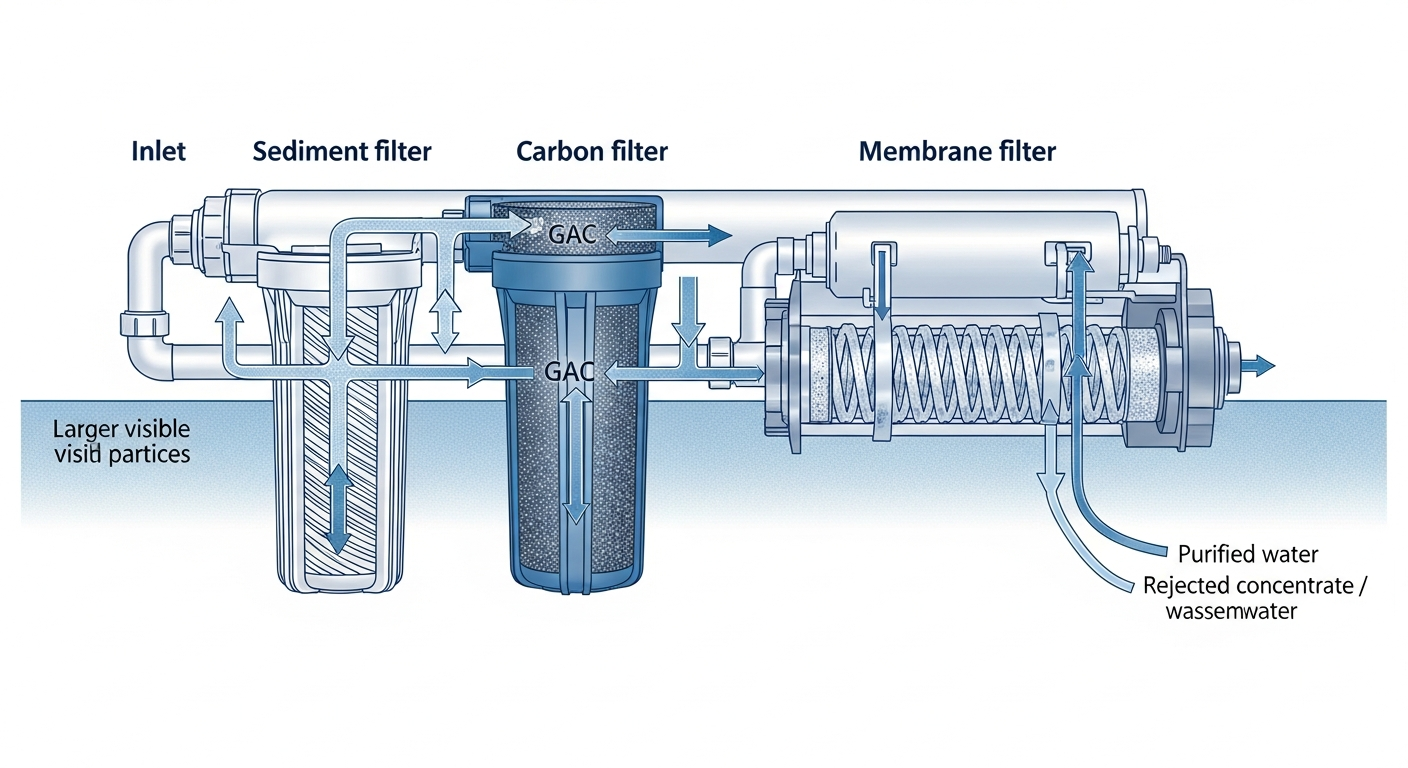
There are four primary categories of home water filtration: point-of-use (POU) systems like under-sink filters, point-of-entry (POE) whole-house systems, reverse osmosis (RO) systems, and specialty filters for specific contaminants. Each serves a different purpose and budget range. POU systems are ideal for drinking water, while POE systems protect your entire plumbing infrastructure.
What Contaminants Can Be Removed?
Modern filtration systems can target a wide range of contaminants: sediment and particulates, chlorine and chloramines, heavy metals (lead, mercury, arsenic), volatile organic compounds (VOCs), pharmaceuticals and hormones, bacteria and parasites (with UV addition), and increasingly, PFAS 'forever chemicals'. The key is matching your filter's certifications (NSF/ANSI 42, 53, 58, 401) to your water quality report.
Installation Considerations
Before purchasing, consider your installation requirements. Countertop and pitcher filters require no installation. Under-sink systems need basic plumbing skills or a one-time professional install ($100-200). Whole-house systems require professional installation and potentially a bypass loop for maintenance. Factor these costs into your total budget.
Maintenance and Long-Term Costs
The purchase price is just the beginning. Calculate your 5-year cost of ownership by adding: replacement filter costs (every 3-12 months depending on system), membrane replacements for RO systems (every 2-3 years), and potential professional maintenance. A $200 pitcher system might cost more over 5 years than a $500 under-sink system with cheaper replacement cartridges.
Ready to Choose a System?
Browse our reviewed and rated home water filtration products to find the best option for your home.
View Product Reviews