The Ultimate Guide to Softening & Conditioning
Everything you need to know, explained in plain English.
Key Takeaways
- Test your water hardness before buying any system
- Salt-based softeners remove minerals; salt-free systems condition only
- Proper sizing prevents waste and maintains water quality
- Consider bypass lines for drinking water
- Check local regulations on brine discharge
What is Hard Water?
Hard water contains high concentrations of dissolved calcium and magnesium. While not a health hazard, it causes scale buildup in pipes and appliances, reduces soap efficiency, leaves spots on dishes and fixtures, and can make skin and hair feel dry. Water hardness is measured in grains per gallon (gpg) or parts per million (ppm). Above 7 gpg is generally considered 'hard'.
Salt-Based vs. Salt-Free Systems
Traditional ion-exchange softeners use salt to remove calcium and magnesium, producing genuinely 'soft' water. Salt-free 'conditioners' don't remove minerals but alter their structure to prevent scale formation. The right choice depends on your priorities: true softening (salt-based) or scale prevention with retained minerals (salt-free).
How Ion Exchange Works
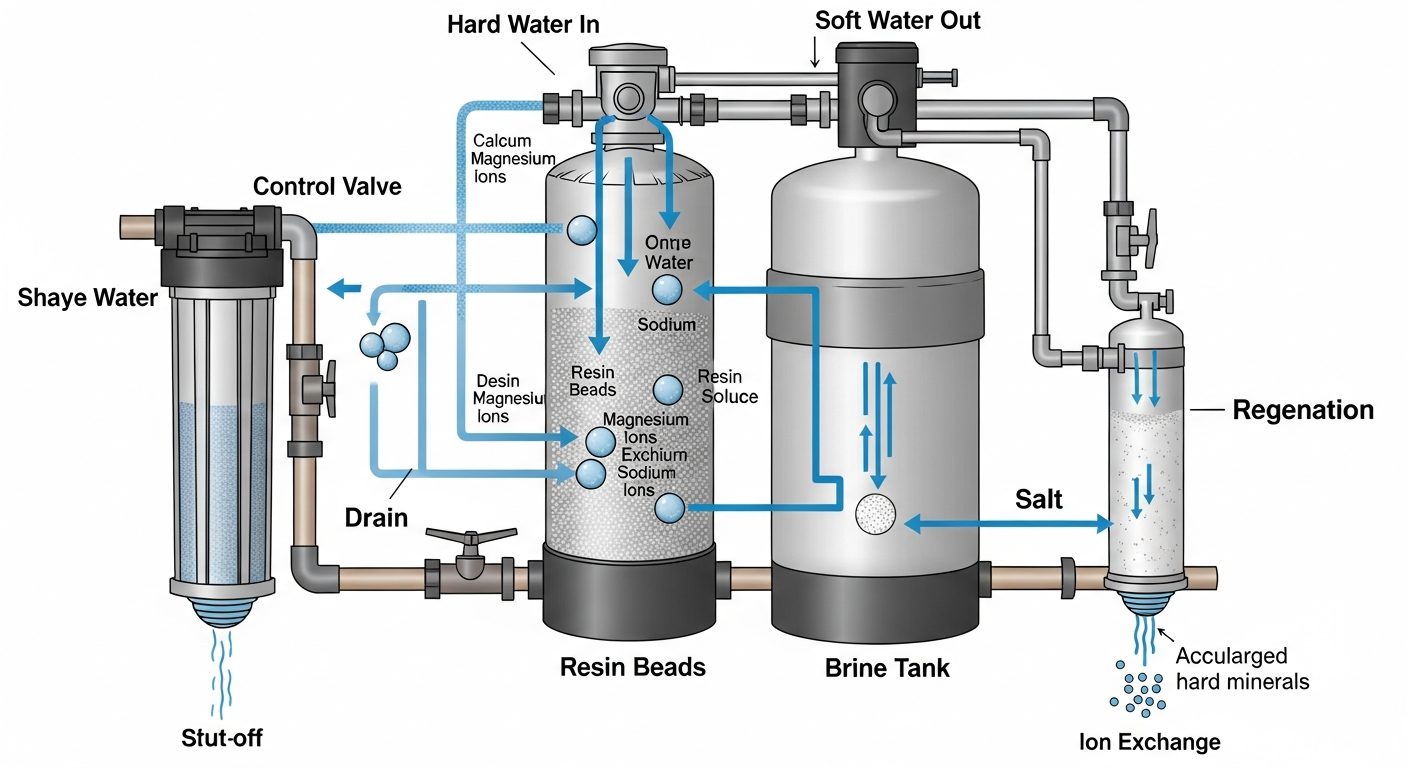
Salt-based softeners contain resin beads charged with sodium ions. As hard water flows through, calcium and magnesium ions swap places with sodium ions. When the resin is exhausted, the system regenerates by flushing with a salt brine solution. This process adds a small amount of sodium to your water—usually negligible for most diets, but a consideration for those on sodium-restricted diets.
Sizing and Flow Rates
Proper sizing is critical. An undersized softener will regenerate too frequently, wasting salt and water. An oversized unit may not regenerate often enough, allowing bacteria to grow. Calculate your daily water usage and hardness level, then choose a system with 20-30% extra capacity. Most homes need 32,000-48,000 grain capacity units.
Environmental and Health Considerations
Salt-based softeners discharge brine during regeneration, which can impact septic systems and municipal treatment plants. Some areas have restrictions or bans. Salt-free systems have no discharge issues. For drinking water, many households bypass the softener for a cold water line or use a reverse osmosis system for drinking water to avoid added sodium.
Ready to Choose a System?
Browse our reviewed and rated softening & conditioning products to find the best option for your home.
View Product Reviews