The Ultimate Guide to Emerging Water Tech
Everything you need to know, explained in plain English.
Key Takeaways
- AWGs work best in humid environments (40%+ RH)
- Factor in electricity costs when evaluating AWG economics
- Smart monitors can prevent costly water damage
- Leak detection ROI often exceeds 10x after one prevented incident
- Emerging tech will continue to improve home water management
The Rise of Atmospheric Water Generators
Atmospheric Water Generators (AWGs) extract moisture from the air and condense it into drinkable water. Once limited to military and industrial applications, residential AWGs are now accessible and increasingly efficient. They're ideal for off-grid living, areas with poor water quality, or as a sustainable backup water source.
How AWGs Work
Most residential AWGs use refrigerant-based condensation—essentially the same principle as a dehumidifier, but with multi-stage filtration and UV sterilization added. Air is drawn in, cooled below its dew point, and the condensed water is collected, filtered, and stored. Output depends primarily on humidity and temperature: expect 2-5 gallons/day in moderate conditions, less in dry climates.
Smart Water Monitors
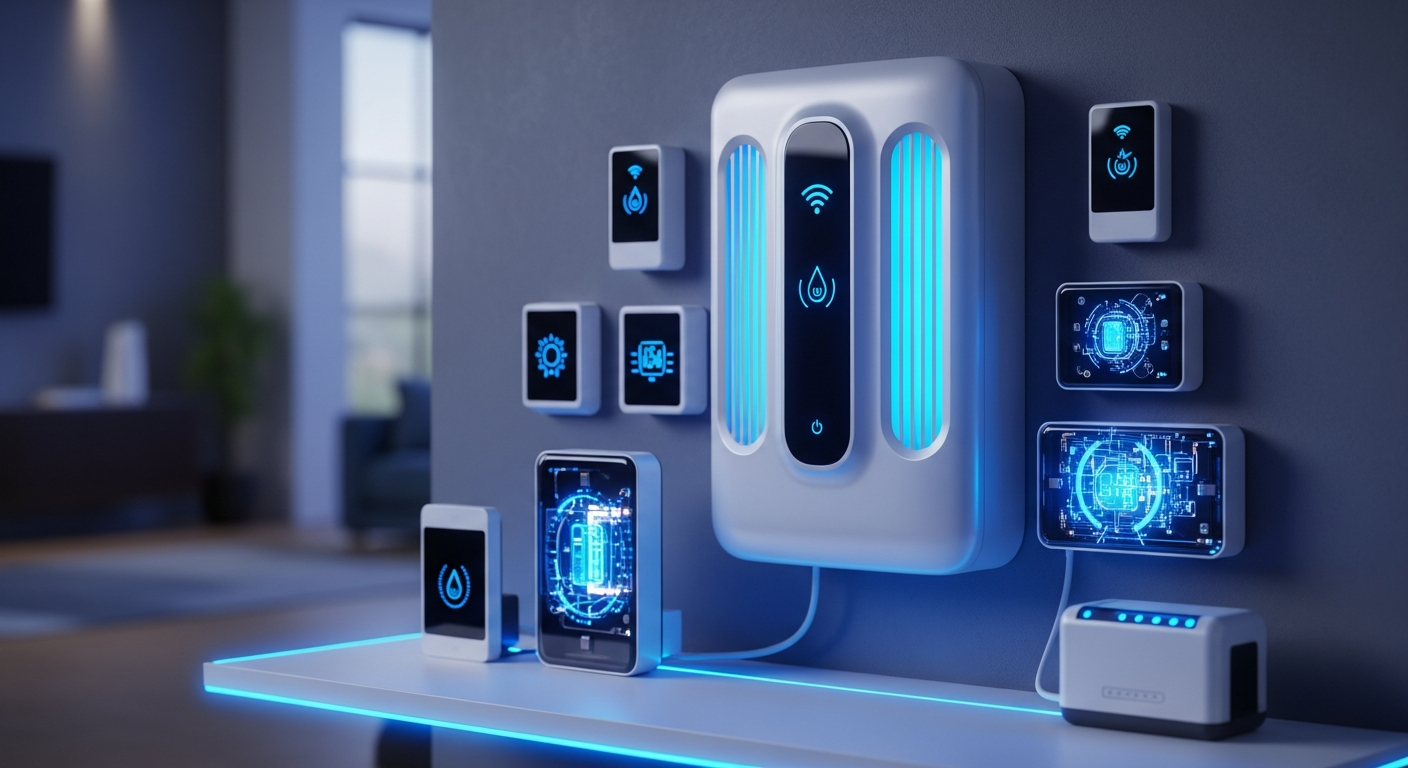
IoT-enabled water monitors can track flow rates, detect leaks, measure TDS, and even analyze usage patterns. Some integrate with home automation systems and can automatically shut off water during detected leaks. These devices provide peace of mind and can prevent catastrophic water damage, often paying for themselves after preventing a single major leak.
Leak Detection Systems
From simple moisture sensors ($20) to whole-home automatic shutoff systems ($500+), leak detection technology has matured significantly. Consider placement under sinks, near water heaters, by washing machines, and in basements. Smart systems can alert your phone and cut water supply remotely—invaluable for vacation homes or frequent travelers.
The Future of Home Water Tech
Emerging technologies include AI-powered water quality prediction, blockchain-verified water testing, graphene-based filtration membranes, and integrated home water management systems that optimize for health, efficiency, and cost. While some are still experimental, expect significant advances in the next 5-10 years.
Ready to Choose a System?
Browse our reviewed and rated emerging water tech products to find the best option for your home.
View Product Reviews