The pH Spectrum: From Your Blood to Your Tap
Hydrology University ·
- Current News
- Drinking Water
- Testing
- pH
Watch: The pH Spectrum: From Your Blood to Your Tap · Short version: The pH Spectrum
pH is a number everybody has heard of and few people think about. Yet it runs through everything from the blood in your veins to the water coming out of your faucet. Understanding the pH spectrum helps you read a water report with confidence, and see why the way water is made matters as much as where it comes from.
What pH Measures
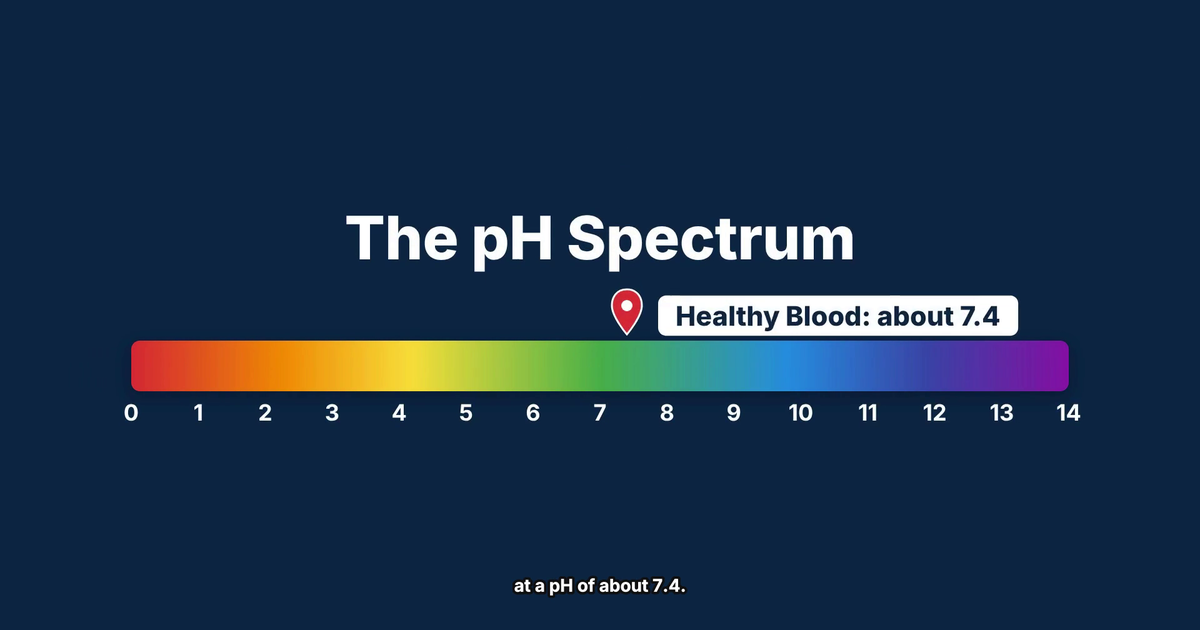
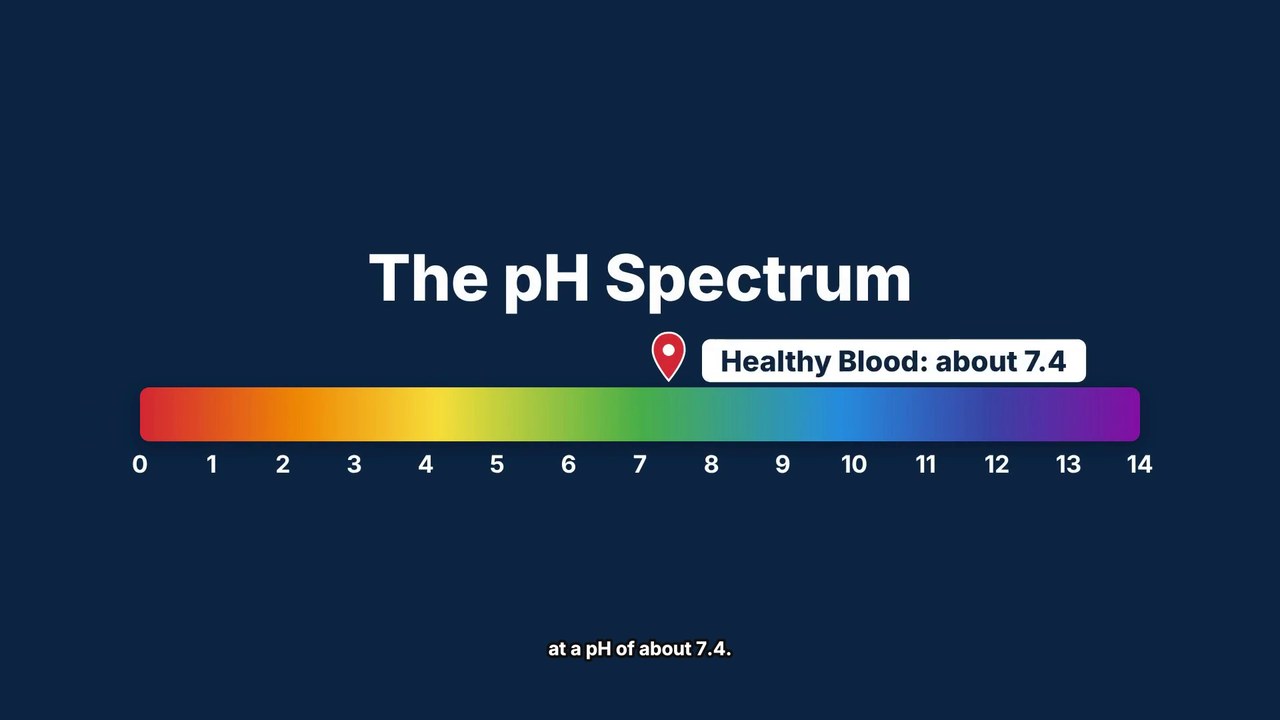
pH describes how acidic or basic (alkaline) a liquid is, on a scale from 0 to 14. A pH of 7 is neutral; below 7 is acidic, above 7 is basic. The scale is logarithmic, so each whole number is a tenfold change: water at pH 6 is ten times more acidic than water at pH 7.
Your Body's pH Map
Your body isn't one pH. Different systems run at very different levels, each suited to its job.
- Blood: 7.35 to 7.45 (typical, arterial blood). Among the most tightly controlled numbers on the list. In healthy people, the lungs, kidneys, and chemical buffers in the blood keep it in this narrow window. Below 7.35 is called acidemia; above 7.45 is called alkalemia. These are medical matters for a clinician.
- Stomach: about 1.5 to 3.5 (typical). Strongly acidic by design, to help break down food.
- Urine: 4.5 to 8. A wide range, because the kidneys adjust what they excrete to help keep blood steady.
- Saliva: about 6.2 to 7.6 (typical). Close to neutral.
The big lesson: your body works hard to keep blood at about 7.4, and it is very good at it.
Drinking Water: The 6.5 to 8.5 Range
For drinking water, the U.S. Environmental Protection Agency lists a pH range of 6.5 to 8.5 under its National Secondary Drinking Water Regulations (40 CFR Part 143).
Secondary standards are non-enforceable guidelines aimed at aesthetic and cosmetic qualities like taste, odor, and effects on plumbing. They are not federally enforceable health standards, though states may adopt their own rules.
Water outside the range can still cause practical problems:
- Below 6.5, water tends to be more corrosive, and EPA notes a bitter, metallic taste and corrosion of pipes and fixtures. Corrosive water can leach metals such as copper and lead from plumbing.
- Above 8.5, EPA notes a slippery feel, a soda-like taste, and deposits (scale) in pipes and appliances.
In short, 6.5 to 8.5 is the range EPA recommends for taste and for the pipes that carry your water. It is an aesthetic guideline, not a statement about whether a particular water is safe to drink.
Alkaline Water and Blood pH
Bottled alkaline water is typically labeled at a pH of about 8 to 10, depending on the brand. Some marketing suggests it can shift the body toward a "better" pH.
Physiology works differently. Stomach fluid runs at about 1.5 to 3.5, so a little alkaline water makes little lasting difference there, and the lungs, kidneys, and blood buffers keep blood in its 7.35 to 7.45 window regardless of the water you drink. Harvard Health and Mayo Clinic both report there is little credible evidence that alkaline water offers health benefits over plain water.
Taste and price are personal choices. Questions about your health or diet are best taken to your doctor.
AWG Water: Often Slightly Acidic
Atmospheric water generators (AWGs) make drinking water by pulling moisture from the air. Air passes over a cold surface, water vapor condenses into droplets, and the condensate is collected and treated.
Here's the pH twist: condensate is low in minerals, and as it forms it absorbs carbon dioxide (CO2) from the air. Dissolved CO2 forms a weak acid (carbonic acid). Pure water in equilibrium with atmospheric CO2 sits at about pH 5.6 (USGS). Measured values for water collected from air vary with location, air quality, and equipment; published studies report condensate and dew from acidic to near neutral, and treated AWG output in one EPA-lab test ranged from 6.0 to 7.8.
This isn't a flaw in the source; rain is slightly acidic for the same reason (about pH 5.6). It means condensate is often adjusted or remineralized before it is served.
The Fix: Mineralization
That step is mineralization, often done with a calcite (calcium carbonate) stage. As water flows through, it dissolves small amounts of minerals, adding calcium (and, with blended media, magnesium) and nudging pH up toward neutral.
Mineralization matters for two reasons:
- Taste. Very low-mineral water can taste flat to some people, and a little calcium and magnesium can change the taste.
- Plumbing. Bringing pH into the 6.5 to 8.5 range makes water less corrosive to pipes, fittings, and appliances.
Key Takeaways
- Blood is tightly regulated at about 7.4. In healthy people it stays between 7.35 and 7.45; below is acidemia, above is alkalemia.
- Your body runs many pH levels: stomach 1.5 to 3.5 (typical), urine 4.5 to 8 (typical), saliva 6.2 to 7.6 (typical).
- EPA's 6.5 to 8.5 for tap water is a non-enforceable secondary guideline for taste and plumbing, not a health standard.
- Alkaline water (labeled about 8 to 10) does not change blood pH, and Harvard Health and Mayo Clinic report little evidence of benefit over plain water.
- AWG condensate is often slightly acidic (pure water with air CO2 ≈ pH 5.6) because of dissolved CO2; actual values vary.
- Mineralization with calcite raises pH toward neutral, which can improve taste and make water less corrosive to pipes.
Keep Learning
pH is just one piece of the water-quality picture. Watch the short video above for a quick recap you can share, and explore more guides at HydrologyUniversity.com.
Sources
- StatPearls, Physiology, Acid Base Balance: https://www.ncbi.nlm.nih.gov/books/NBK507807/
- StatPearls, Urinalysis: https://www.ncbi.nlm.nih.gov/books/NBK557685/
- Salivary pH: A diagnostic biomarker (NIH PMC): https://pmc.ncbi.nlm.nih.gov/articles/PMC3800408/
- EPA, Secondary Drinking Water Standards: Guidance for Nuisance Chemicals: https://www.epa.gov/sdwa/secondary-drinking-water-standards-guidance-nuisance-chemicals
- 40 CFR 143.3: https://www.ecfr.gov/current/title-40/chapter-I/subchapter-D/part-143/subpart-A/section-143.3
- Harvard Health, Is alkaline water better?: https://www.health.harvard.edu/healthy-aging-and-longevity/is-alkaline-water-better
- Mayo Clinic, Alkaline water: Better than plain water?: https://www.mayoclinic.org/healthy-lifestyle/nutrition-and-healthy-eating/expert-answers/alkaline-water/faq-20058029
- USGS, What is acid rain?: https://pubs.usgs.gov/gip/acidrain/2.html
- Inbar et al., Water 2020, 12(10):2940 (urban dew/AWG pH): https://www.mdpi.com/2073-4441/12/10/2940
- US EPA ORD, Evaluation of Atmospheric Water Generation Technology: Microbial Water Quality: https://cfpub.epa.gov/si/si_public_file_download.cfm?Lab=NERL&p_download_id=537767
Better water, better life.