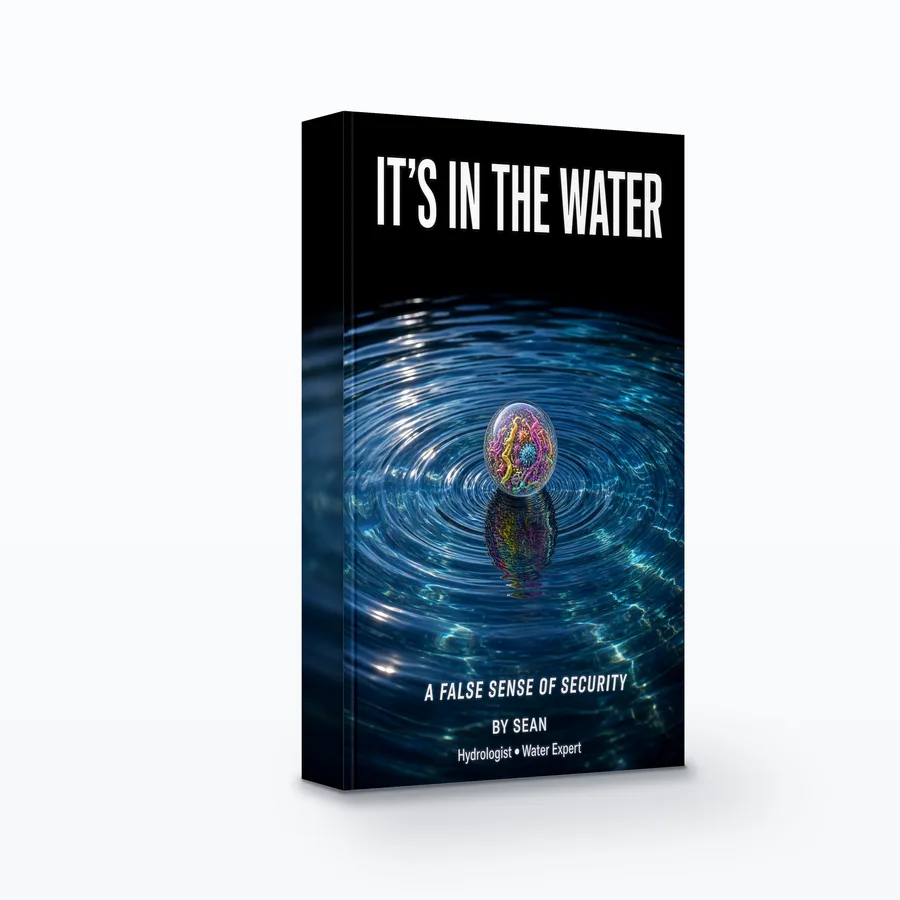
The book · Revised edition, October 2026 · Digital edition (PDF)
It’s in the WATER
A False Sense of Security
Author intro (3:18)
From the co-founder of Hydrology University and WaterVO™. Revised edition, October 2026. Microplastics and nanoplastics are in the water most of us drink. They shed from synthetic textiles, tires and packaging, and they keep breaking into smaller and smaller pieces. Researchers have now found microplastics in tap water, in bottled water and in human placentas, and Sean believes the smallest of them, nanoplastics, are the frontier.
For years, Sean believed reverse osmosis and really good carbon filters were the answer. They still help, and they still belong in a lot of homes. But the more research he read, the more convinced he became that the tap is only half the story. The tiniest particles are chasing the limits of what any filter can catch, and chemists keep inventing new pesticides, pharmaceuticals, cosmetics and industrial compounds faster than any treatment plant can keep up with.
So in this revised edition of It’s in the WATER: A Lifelong Water Guy’s Practical Guide to PFAS, Forever Chemicals, and Safe Drinking Water for Your Family, Sean Lupton-Smith shares where his thinking has landed. WaterVO calls it vapor optimizing: take water from the air instead of from the ground. Filter the air first; he believes that makes the water’s job easier. Harvest the moisture. Then filter that water too. In his view, water drawn from the air starts from a cleaner place than water pulled from rivers and aquifers, and as of 2026, it’s where he’s landed for drinking water.
The book is still practical and short. You’ll learn how water reaches your tap, what municipal treatment does and doesn’t do, and why “compliant” is not the same as “pristine.” It shows you how to read your Consumer Confidence Report and how to test before you trust. It walks through pitchers, reverse osmosis and whole-home systems, and where each one fits today. It covers wells, bottled water and rainwater, then water from the air, and ends with a one-page Water Wise checklist for your fridge. Sean will keep updating it as the technology and the research move forward.
Digital edition (PDF) · instant download link emailed after checkout
In the author’s words
“‘Compliant’ does not mean ‘pristine.’ ‘Treated’ does not mean ‘every contaminant removed.’”
Sean Lupton-Smith, It’s in the WATER (Preface)
“Water remembers everything it touches.”
Sean Lupton-Smith, It’s in the WATER (Chapter 1)
“Your eyes, nose, and tongue are 100,000-year-old instruments evaluating 75-year-old problems. Trust the instruments, not the senses.”
Sean Lupton-Smith, It’s in the WATER (Chapter 4)
“This book is my gift to Joe Public — the no-BS overview I wish I’d had years ago.”
Sean Lupton-Smith, It’s in the WATER (Preface)
Quotes are the author’s own words from the book. From the book: “This book is not medical advice.”
Also on WaterVO · Digital edition (PDF)
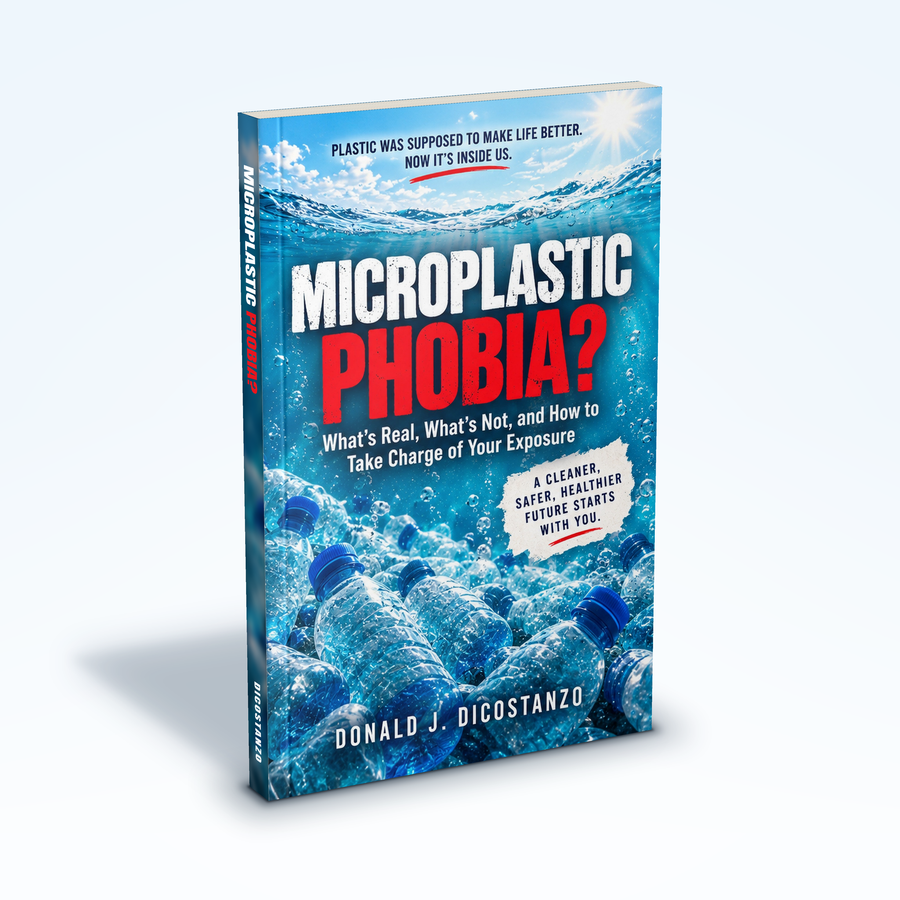
Microplastic Phobia?
From the founder of WaterVO. In Microplastic Phobia? What’s Real, What’s Not, and How to Take Charge of Your Exposure, WaterVO founder Donald J. DiCostanzo looks at where plastic comes from, how it breaks down into microplastics and nanoplastics, what current research says, why recycling hasn’t solved the problem, and what governments have tried.
The second half is practical: everyday steps for water, food, heat, the kitchen, the bathroom and laundry, and indoor air, followed by a seven-day plastic challenge and a thirty-day plastic reduction plan.
Audio summary (5:24)