Free Instant Water Quality CheckTest My Home Water →Test My Bottle Water →
    INDEPENDENT • SCIENCE-BACKED • UNBIASED REVIEWSLaunch the Free Water Quality Test →Now built right into HydrologyUniversity.comInstant Regional Water Data + RecommendationsFree interactive tool · No signup required
    Advertisement
    Recommended SupplierShop water systems at WaterVO
    Shop WaterVO
    HU Rating Dimension · 4 of 6

    Bioenergetics & Charge — How Materials Interact With the Body's Electrochemistry

    Your body runs on ions and electrochemical gradients. Materials that change those gradients matter.

    The human body is, in chemistry terms, a very precisely tuned electrochemical machine. Mitochondria generate energy by pumping protons across a membrane. Nerves fire by moving sodium and potassium. Hormones bind receptors at vanishingly small concentrations. Drinkware materials can — at the margins — change the ions, charge balance, and signaling molecules in your water, and therefore in you.

    Visualizing the Dimension

    Microscopic visualization: ions flowing across a cell membrane, fueling the electron-transport chain inside mitochondria.

    Why It Matters

    This dimension is where the rating goes beyond toxicology into cellular bioenergetics. Glass and intact stainless steel are essentially silent here — they don't add ions or signaling molecules to the water. Copper and aluminum each donate metal ions that have direct cellular roles (helpful in trace amounts, harmful in excess). Plastic donates molecules that mimic estrogen and can perturb endocrine signaling at parts-per-billion concentrations. The body is more sensitive than the gross-toxicity numbers suggest.

    How Hydrology University Measures It

    1

    Whether the material donates ions that participate in cellular energy chemistry (Cu, Fe, Mg, Zn) or charge balance (Na, K, Ca).

    2

    Whether the material donates endocrine-active molecules (BPA, BPS, BPF, phthalates).

    3

    Net contribution to the drink's electrochemical character — ionic strength, pH shift, redox potential.

    4

    Cumulative-dose context: even small migration matters if exposure is daily and lifelong.

    Deep Dive

    The body is electrochemistry, not just chemistry

    Mitochondria — the cell's energy factories — generate ATP by pumping protons across a membrane and letting them flow back through ATP synthase. This is purely an electrochemical process: it depends on a precise voltage gradient (~150–180 mV) and enzymes that contain copper, iron, and magnesium at their active sites. Trace amounts of these metals are essential. Excess amounts (or wrong ions) can short-circuit the system.
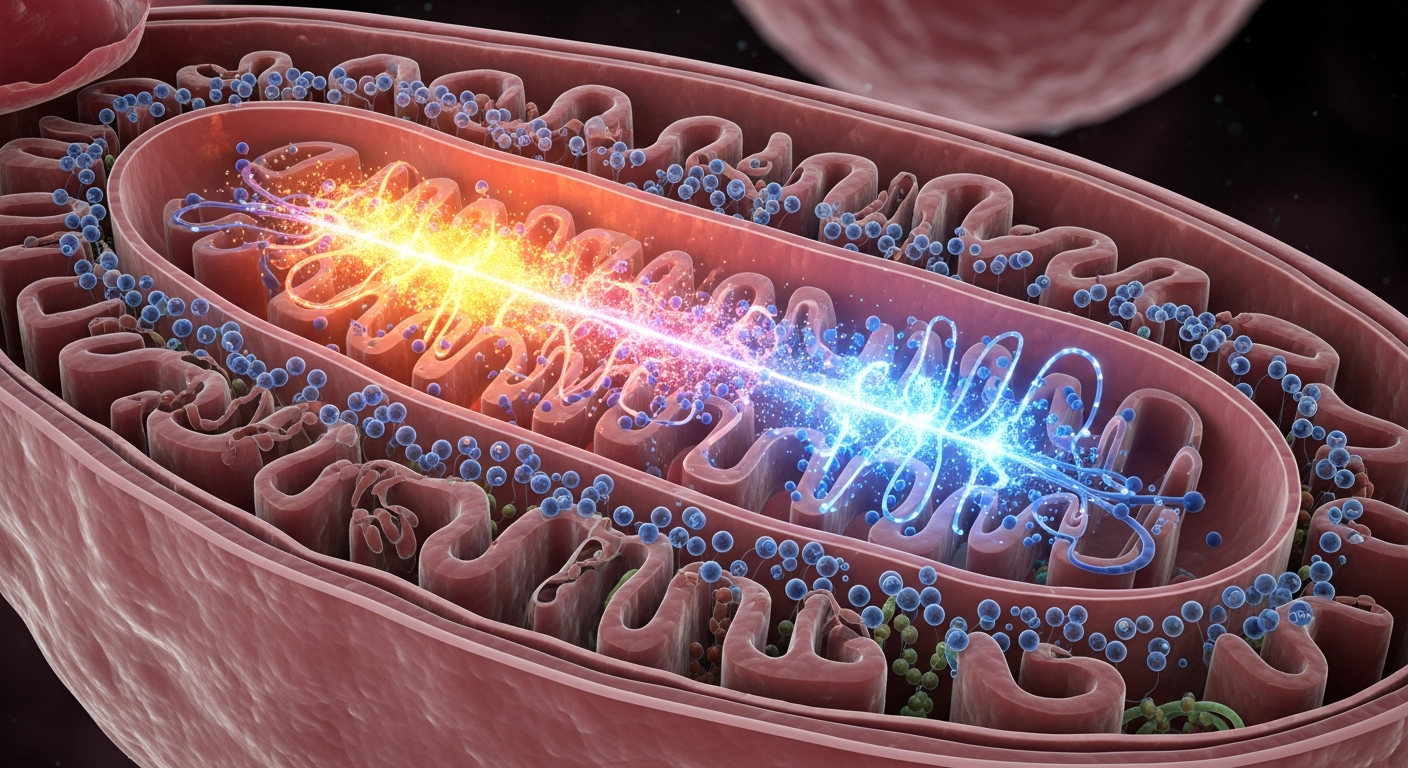
    The mitochondrial electron-transport chain — copper, iron, and a precise proton gradient generate cellular energy.
    The mitochondrial electron-transport chain — copper, iron, and a precise proton gradient generate cellular energy.

    Ions as signals — the body's electrolyte symphony

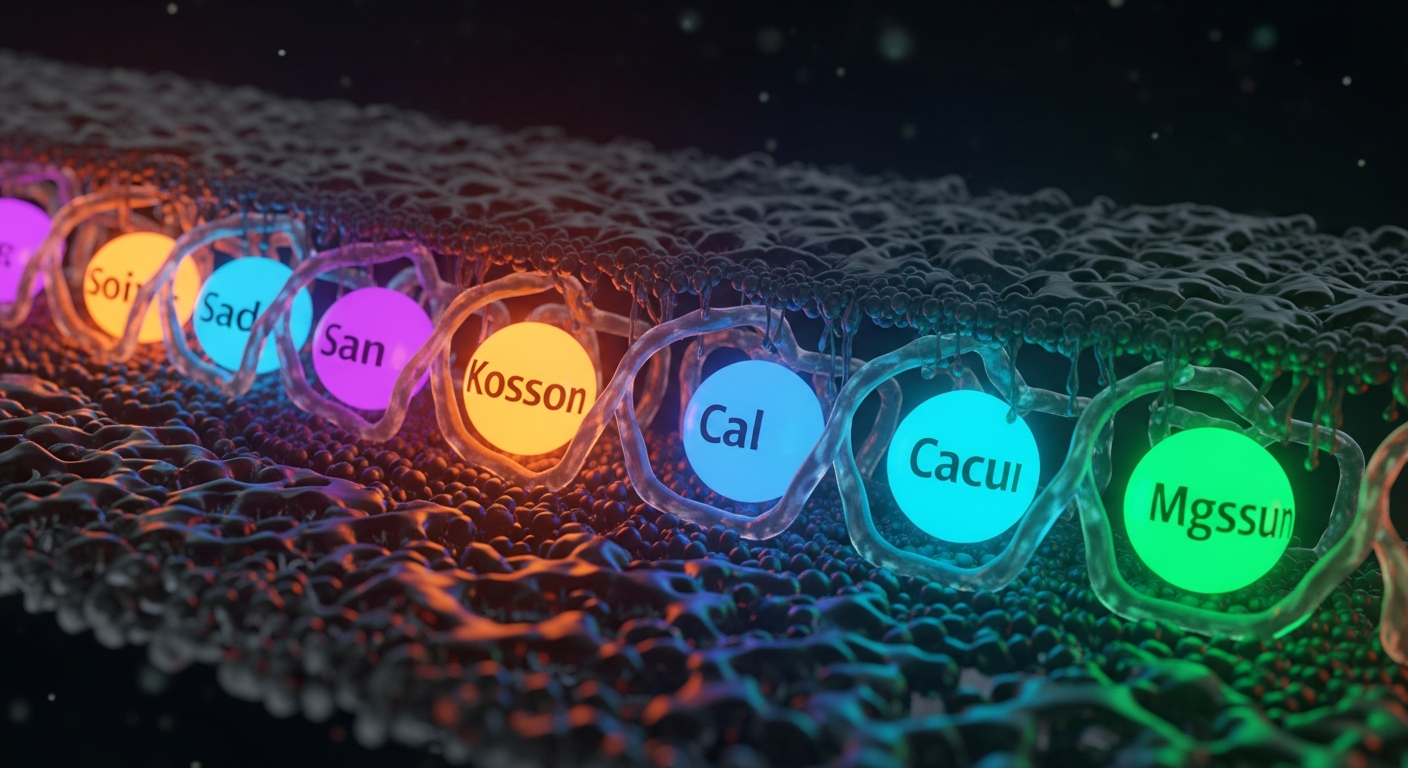
    Sodium, potassium, calcium, and magnesium ions are the body's primary signaling currency outside the cell. Nerves fire on Na/K gradients. Muscles contract on Ca pulses. Bone, blood pH, and even mood depend on Mg. Pure water has essentially no ions; mineralized natural water provides a balanced mix. A material that adds an ion at the wrong concentration (e.g., aluminum, which has no biological role) competes with these signals.

    Electrolytes flowing through cell-membrane channels — the body's signaling currency.
    Electrolytes flowing through cell-membrane channels — the body's signaling currency.

    Endocrine disruptors — molecules that pretend to be hormones

    BPA, BPS, and BPF have a phenolic shape similar enough to estrogen that they bind estrogen receptors at very low doses. The body doesn't see them as foreign chemicals — it sees them as a (weak, mistimed, persistent) hormone signal. This is why endocrine disruptors are biologically active at concentrations far below 'classical' toxicity thresholds: they hijack a system that already responds to nanogram-per-liter signals.

    Pure water carries no signaling cargo — the bioenergetic gold standard.
    Pure water carries no signaling cargo — the bioenergetic gold standard.

    How each material rates bioenergetically

    Glass donates essentially nothing — bioenergetically silent and the gold standard. Stainless steel is nearly silent under normal conditions, donating only trace iron/chromium/nickel that the body already manages. Copper is genuinely biologically active — Cu²⁺ is the active center of cytochrome c oxidase (the final enzyme of the respiratory chain) and a cofactor in dozens of enzymes. Daily small doses are physiological; chronic excess (or acute overload from acidic drinks in copper) is toxic. Aluminum is the most concerning metal because Al³⁺ binds to phosphate groups in DNA, ATP, and signaling cascades — biological systems have no use for aluminum and limited ability to clear it. Plastic is uniquely concerning bioenergetically because the molecules it donates aren't ions but signaling mimics that can re-time hormone activity.

    Background Research & Citations

    Where the Science Comes From

    Copper and the mitochondrial respiratory chain

    Cobine, Pierrel & Winge, Biochim. Biophys. Acta (2006)

    Copper is essential for cytochrome c oxidase, the terminal enzyme of cellular respiration. Both deficiency and excess derange energy metabolism.

    Low-dose endocrine activity of bisphenols

    vom Saal & Hughes, Environ. Health Perspect. (2005)

    Documented hormone-mimicking effects of BPA at doses well below the FDA's no-observed-adverse-effect level.

    Aluminum and biological systems

    Exley, J. Inorganic Biochem. (2009)

    Al³⁺ has no known biological role and binds tightly to phosphate-containing molecules; long-term implications for neurological tissue are an active area of research.

    Key Takeaways
    • The body runs on ions and gradients — what dissolves into your water can interact with that machinery.
    • Glass is bioenergetically silent; copper is active and dose-dependent; aluminum and plastic perturb systems they don't belong in.
    • Concentration matters less than chronic exposure when a chemical mimics a hormone or essential cofactor.
    WaterVo
    Pure Choices. Better Living.
    HU Trusted Supplier

    Once you know what's in your water, you need to do something about it. WaterVO is Hydrology University's recommended supplier for residential filtration systems, atmospheric water generators (AWG), and home hydration equipment vetted against our independent rating standards.

    Filtration systems Atmospheric water generators Whole-home solutions
    Visit WaterVO.com
    AdvertisementFeatured Suppliers

    Top Home Water Filtration Brands

    Trusted brands across whole-house systems, reverse osmosis, and drinking-water filters. Listings link directly to each brand. Our reviews and ratings are editorially independent and never for sale.

    Sponsored listings. Hydrology University may earn a fee from advertisers featured here. Listings are not endorsements and do not constitute legal, financial, or professional advice.

    Advertisement
    Tankless RO & FiltersUpgrade to tankless reverse osmosis with Waterdrop
    Shop Waterdrop
    Contact Us