Free Instant Water Quality CheckTest My Home Water →Test My Bottle Water →
    INDEPENDENT • SCIENCE-BACKED • UNBIASED REVIEWSLaunch the Free Water Quality Test →Now built right into HydrologyUniversity.comInstant Regional Water Data + RecommendationsFree interactive tool · No signup required
    Advertisement
    Recommended SupplierShop water systems at WaterVO
    Shop WaterVO
    HU Rating Dimension · 2 of 6

    Oxidation & Corrosion — Rust, Patina, Photo-Oxidation & Self-Healing

    How materials react when oxygen, water, and time get involved.

    Oxidation is the universal aging process for materials in contact with water and air. But oxidation isn't always bad — sometimes it forms a destructive rust, sometimes a stable protective patina, sometimes a self-healing molecular shield. Understanding which is which is the difference between a 5-star material and a 1-star material.

    Visualizing the Dimension

    Time-lapse: iron rusting orange-red, copper greening into patina, aluminum forming powdery oxide — three different fates for three different metals.

    Why It Matters

    When a material oxidizes badly, it sheds particles, ions, and breakdown products into your drink. When it oxidizes well, it forms a stable surface that actually protects you. This single chemistry concept explains why glass lasts forever, why stainless steel doesn't rust, why copper tarnishes harmlessly, why aluminum cans need a plastic liner — and why old plastic bottles get cloudy and brittle.

    How Hydrology University Measures It

    1

    Type of oxide layer formed: protective (passive) vs. destructive (porous/flaking).

    2

    Rate of mass loss or surface degradation under standardized accelerated aging.

    3

    Galvanic potential when in contact with other materials (mixed-metal corrosion).

    4

    Photo-oxidation behavior under UV light — how fast polymer chains break.

    5

    Recovery / self-healing capacity after surface damage.

    Deep Dive

    1. Destructive oxidation — rust

    Iron and most non-stainless steels form iron(III) oxide (Fe₂O₃·nH₂O) — what we call rust. Rust is porous and flaky: it doesn't seal the surface. Underneath every flake, fresh iron oxidizes again, so the corrosion never stops. This is why food-grade water systems avoid bare iron entirely. Old iron pipes are also a major lead-leaching pathway because lead solder used to join them is exposed by rust.
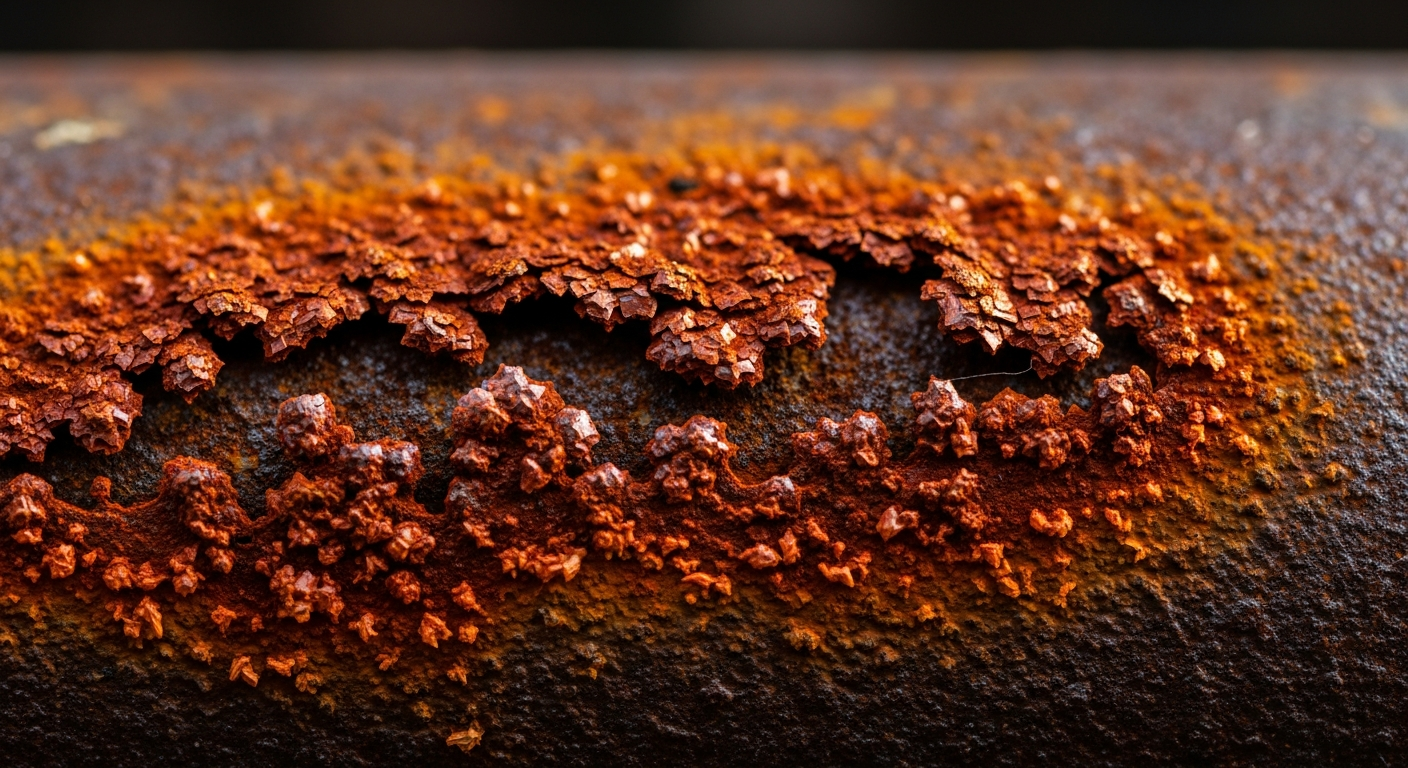
    Macro: iron(III) oxide crystals — porous, flaky, and unable to protect the metal underneath.
    Macro: iron(III) oxide crystals — porous, flaky, and unable to protect the metal underneath.

    2. Stable, protective oxidation — patina

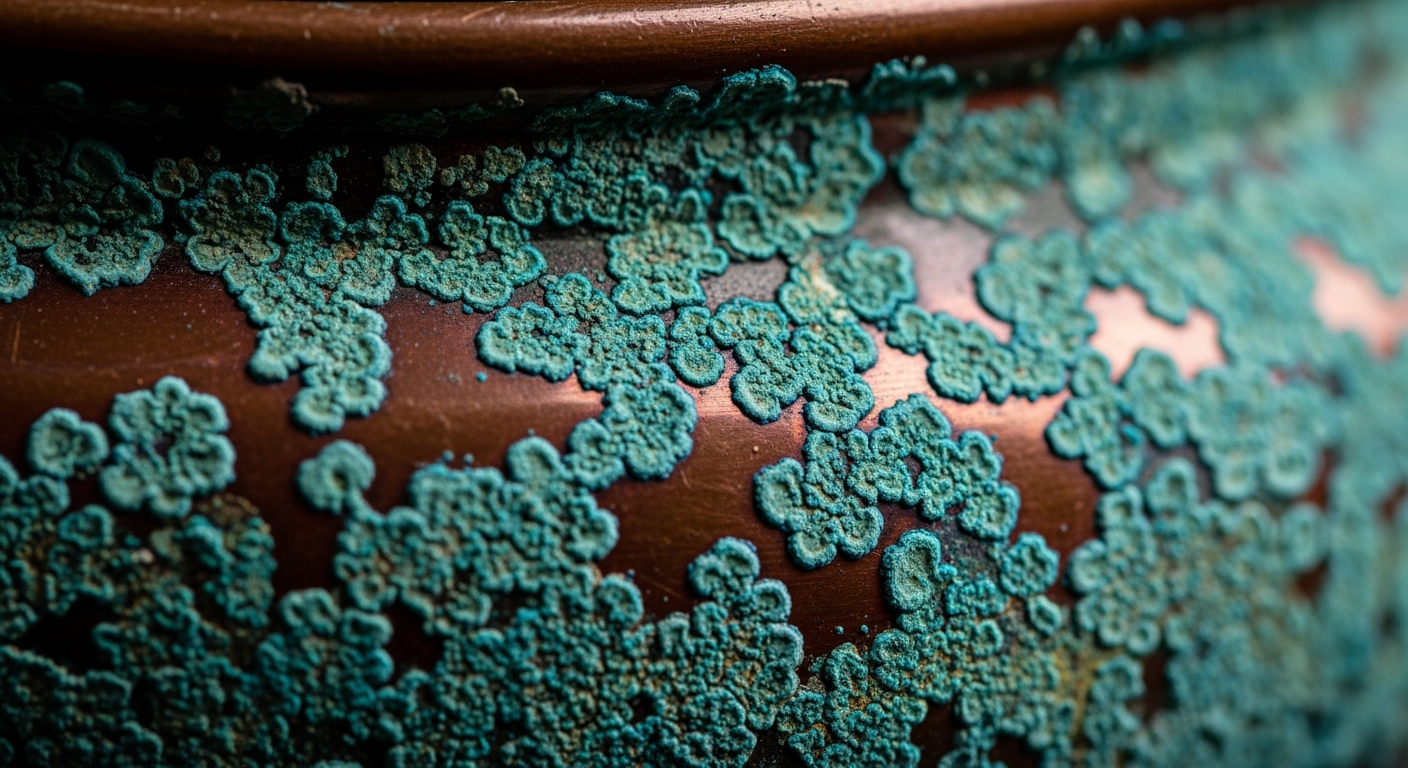
    Copper forms a beautifully complex layered patina: first cuprous oxide (Cu₂O, dark red), then cupric oxide (CuO, brown-black), and over years a vivid green copper carbonate or sulfate (the Statue of Liberty's color). Patina is dense, adherent, and slows further reaction dramatically. Copper-ion release into water is highest when the metal is fresh and clean — it slows as patina forms, but never goes to zero. This is why traditional Ayurvedic copper vessels are alternated with rest periods, and why copper drinkware shouldn't be used for acidic drinks like citrus or vinegar.

    Macro: copper verdigris — dense, adherent, and chemically stable. A protective form of corrosion.
    Macro: copper verdigris — dense, adherent, and chemically stable. A protective form of corrosion.

    3. Self-healing oxidation — the passive layer

    Stainless steel's superpower is the chromium passive layer: a film of chromium(III) oxide (Cr₂O₃) only ~2–5 nanometers thick, so transparent it's invisible. This layer instantly re-forms over any fresh scratch as long as oxygen is present. That's why stainless steel doesn't rust like regular steel — and why heavily damaged stainless (e.g., dishwasher salt etching) can corrode locally where the passive layer can't keep up. Aluminum has a similar but more brittle aluminum-oxide layer, which is why aluminum cans use a polymer liner to keep acidic beverages from breaking through.

    Molecular view: stainless steel's chromium-oxide passive layer self-healing over a fresh scratch.
    Molecular view: stainless steel's chromium-oxide passive layer self-healing over a fresh scratch.

    4. Polymer oxidation — photo-degradation

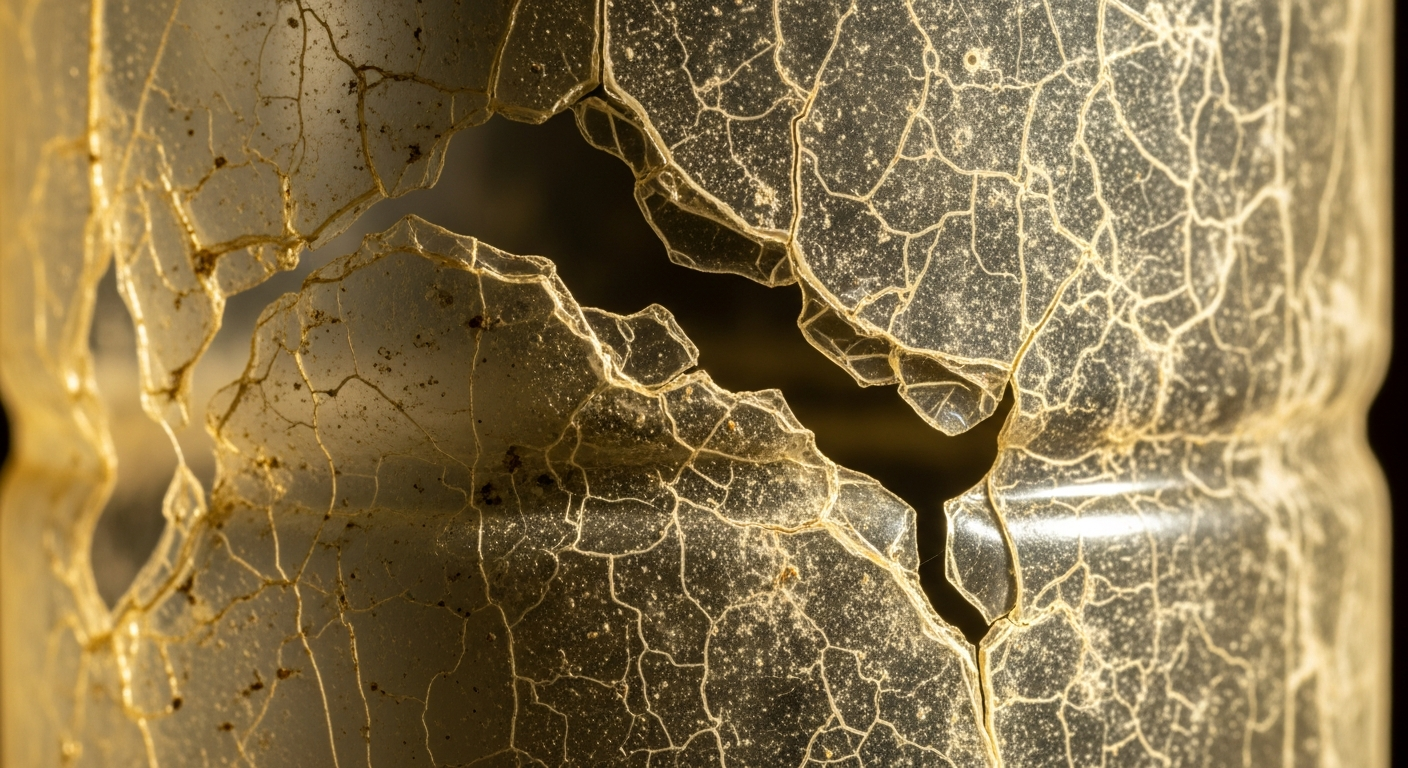
    Plastics don't 'rust' but they do oxidize. UV light breaks the long polymer backbone into smaller fragments, and oxygen attacks the broken ends. The visible result is yellowing, crazing, brittleness, and surface cloudiness. The invisible result is microplastics shedding off the surface and into your drink, plus the original additives (BPA, plasticizers) being released as the polymer matrix loosens. Heat accelerates photo-oxidation by orders of magnitude — which is why a plastic bottle in a hot car ages chemically much faster than one in a cool pantry.

    Macro: a sun-faded, brittle, cloudy plastic bottle — photo-oxidation in action.
    Macro: a sun-faded, brittle, cloudy plastic bottle — photo-oxidation in action.

    5. Galvanic corrosion — when two metals meet

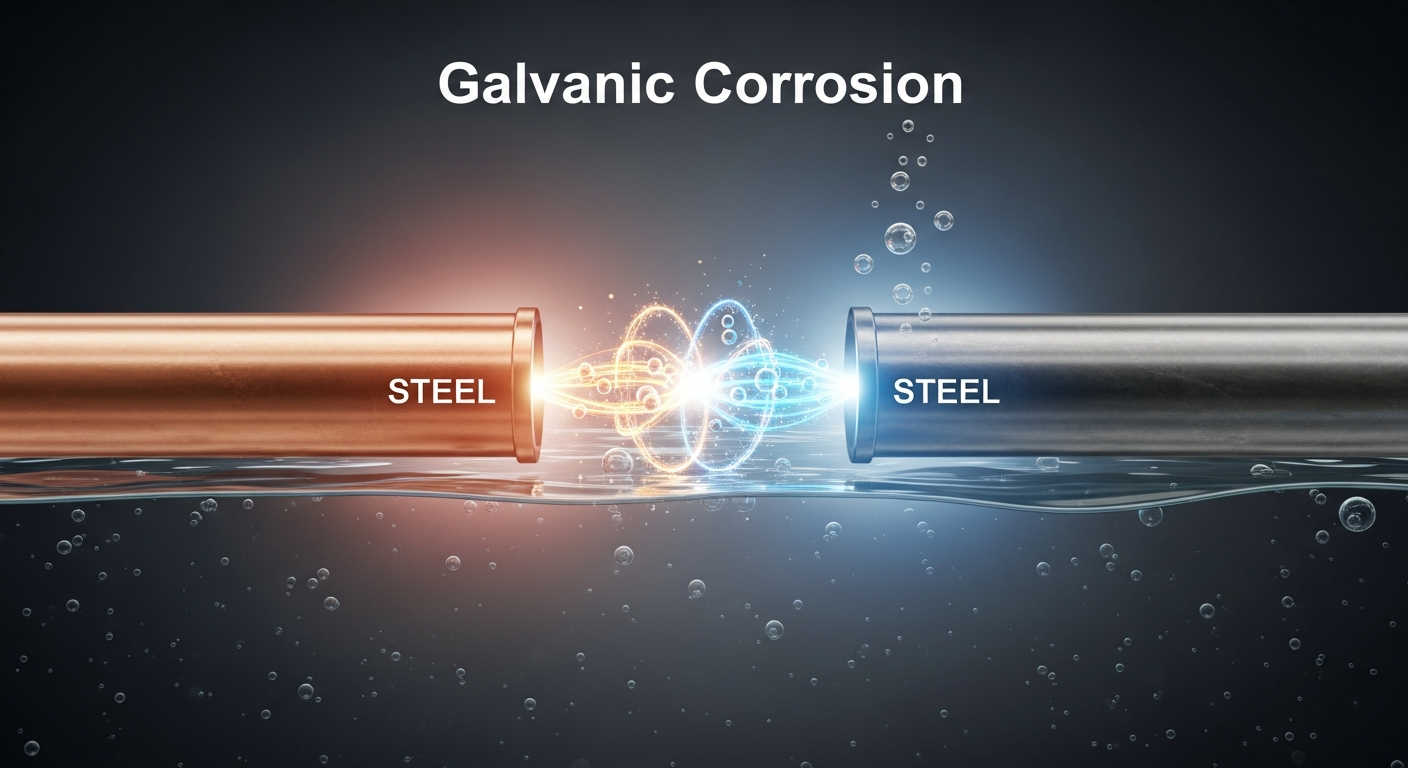
    When two different metals contact each other in the presence of moisture, the more reactive one corrodes faster than it would alone — the less reactive one stays protected. This is why old copper-and-steel plumbing junctions corrode preferentially at the steel side, releasing iron and trace lead. It's also why a small piece of dissimilar metal in a stainless steel bottle (e.g., a chipped logo or imported component) can create a corrosion hotspot you'd never expect from the bulk material.

    Galvanic corrosion: dissimilar metals in contact form a tiny battery — and the more reactive metal pays the price.
    Galvanic corrosion: dissimilar metals in contact form a tiny battery — and the more reactive metal pays the price.
    Bonus Visualization

    Stainless steel's secret: a chromium-oxide passive layer that constantly self-heals over scratches at the molecular level.

    Background Research & Citations

    Where the Science Comes From

    Passive films on stainless steels

    Olsson & Landolt, Electrochimica Acta (2003)

    Comprehensive review of the chromium-oxide passive layer thickness, composition, and self-repair kinetics that make stainless steel corrosion-resistant.

    Copper release from drinking water plumbing

    Edwards et al., J. AWWA (1996)

    Copper release into stagnant tap water is highest in new pipes, dropping as the protective oxide film matures — the same patina chemistry that governs copper drinkware.

    UV-induced photo-oxidation of polyethylene & polypropylene

    Singh & Sharma, Polymer Degradation and Stability (2008)

    Documented chain scission, surface cracking, and microplastic generation under accelerated UV exposure — the same mechanism that ages plastic drinkware.

    Key Takeaways
    • Not all oxidation is bad — the form of the oxide matters more than the fact of oxidation.
    • Glass, stainless steel, and copper all 'oxidize' in ways that protect rather than destroy.
    • Plastics oxidize destructively under UV and heat — the cause of cloudiness, brittleness, and increased migration.
    • Galvanic corrosion can cause hidden hotspots when dissimilar metals touch.
    WaterVo
    Pure Choices. Better Living.
    HU Trusted Supplier

    Once you know what's in your water, you need to do something about it. WaterVO is Hydrology University's recommended supplier for residential filtration systems, atmospheric water generators (AWG), and home hydration equipment vetted against our independent rating standards.

    Filtration systems Atmospheric water generators Whole-home solutions
    Visit WaterVO.com
    AdvertisementFeatured Suppliers

    Top Home Water Filtration Brands

    Trusted brands across whole-house systems, reverse osmosis, and drinking-water filters. Listings link directly to each brand. Our reviews and ratings are editorially independent and never for sale.

    Sponsored listings. Hydrology University may earn a fee from advertisers featured here. Listings are not endorsements and do not constitute legal, financial, or professional advice.

    Advertisement
    Whole-House ProtectionTreat every tap with a SpringWell whole-house system
    Shop SpringWell
    Contact Us