What happens between condensation and a glass you'd actually drink?
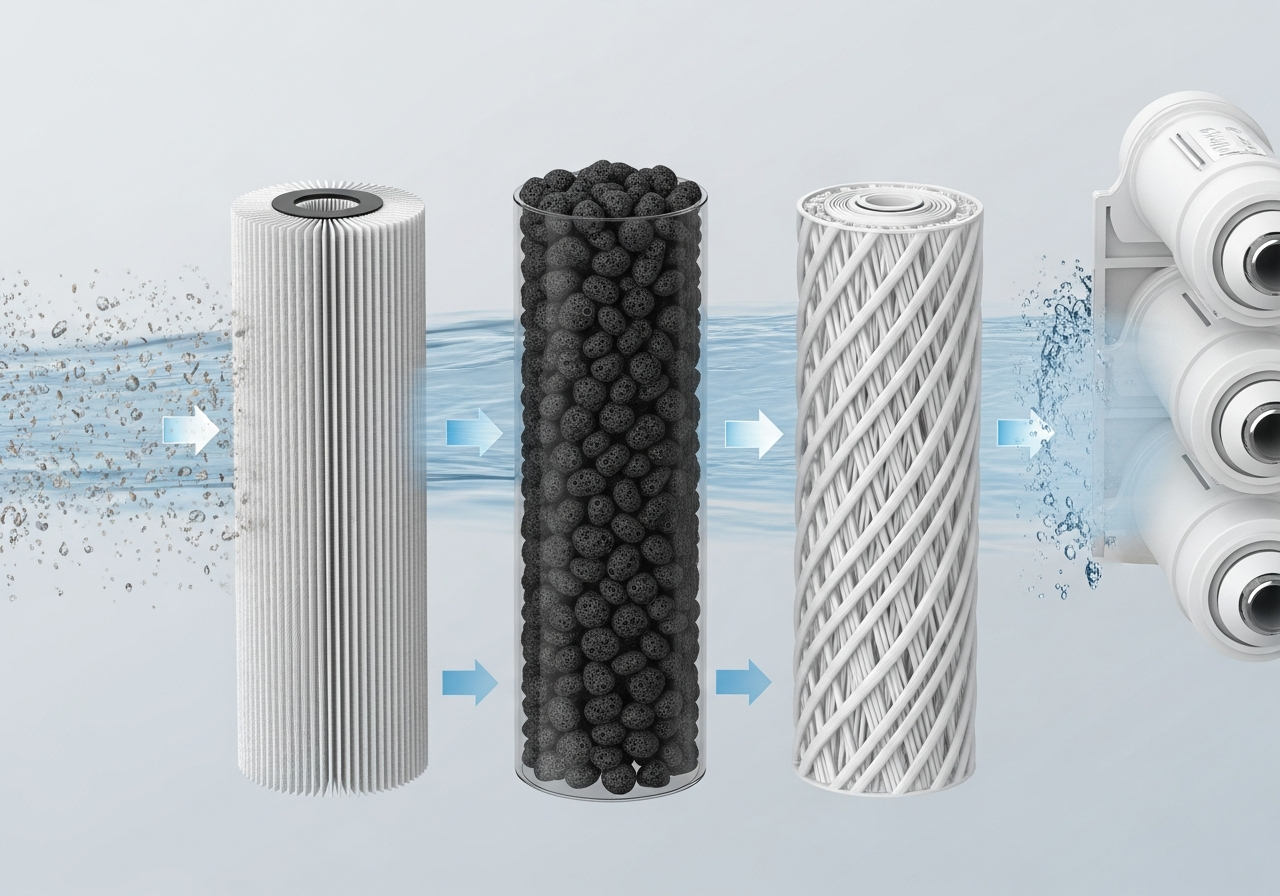
Even near-distilled condensed water deserves a final polish. Multi-stage filtration sends the water through a sequence of media, each targeting something different: sediment filters catch fine particles, activated carbon adsorbs odors and organic compounds, and a reverse osmosis membrane removes anything down to the molecular level.
Watch This Stage in Action
Water flowing through layered media — sediment, activated carbon, and reverse osmosis — emerging progressively clearer.
Why It Matters
Filtration is the safety net that guarantees consistency. Air quality varies, intake conditions change, and water sits in a basin before use — filtration ensures that whatever entered the system, what comes out is reliably clean, clear, and odor-free. It's the difference between water that's usually fine and water you can trust every single pour.
How It Works
1
Sediment filtration removes fine suspended particles and protects later stages.
2
Activated carbon adsorbs odors, tastes, chlorine-type compounds, and dissolved organics.
3
A reverse osmosis (RO) membrane rejects particles down to the molecular scale.
4
Polished water moves on, clear and neutral-tasting, toward sterilization.
Deep Dive
Each layer has a job
Good filtration isn't one filter — it's a relay. Coarse sediment media handle the big stuff first so the finer, more expensive stages aren't wasted on particles they don't need to catch. Activated carbon then goes after the molecules that affect taste and smell. Finally, the reverse osmosis membrane provides the molecular-level barrier, rejecting the smallest dissolved contaminants. Sequencing them in the right order is what makes the whole system efficient and long-lasting.
Layered cartridges: sediment, activated carbon, and a reverse osmosis membrane in sequence.
How activated carbon actually works
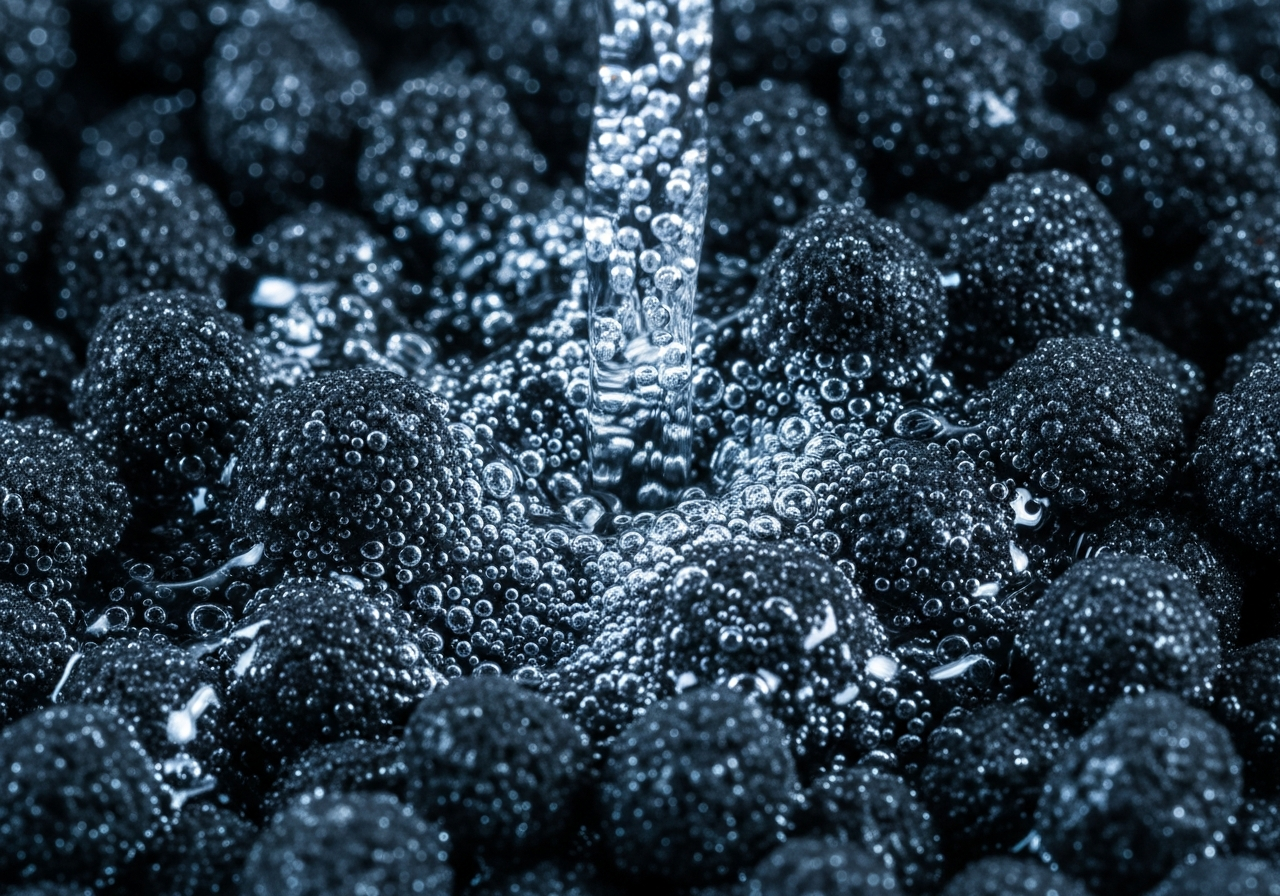
Activated carbon is riddled with tiny pores that give a single gram an enormous internal surface area. As water flows through, organic molecules and odor compounds stick to that surface in a process called adsorption. This is why carbon-filtered water tastes 'cleaner' — the compounds responsible for off-flavors are physically trapped rather than chemically altered.
Activated-carbon granules present a vast internal surface that adsorbs odors and organics.
At a Glance
Filtration Stages
5–7 stages
TDS Output
10–50 ppm
Key Media
Sediment · Carbon · RO
Carbon Action
Adsorption
The Science Behind It
Activated carbon adsorption
EPA drinking water treatment guidance
Granular activated carbon effectively removes many organic contaminants and taste/odor compounds through adsorption onto its high-surface-area pore structure.
Reverse osmosis rejection
Membrane science literature
Reverse osmosis membranes reject dissolved solids and contaminants at the molecular scale, producing very low-TDS water.
Key Takeaways
Filtration is a sequence — each stage handles what the previous one passed along.
Activated carbon traps the molecules behind bad taste and odor through adsorption.
Reverse osmosis is the final molecular barrier, keeping output reliably low in dissolved solids.
WaterVO™
Pure Choices. Better Living.
Independent Seller
WaterVO is an independent seller of water products. Hydrology University is a publisher and referral source, not the seller.
Filtration systems Atmospheric water generators Whole-home solutions