Free Instant Water Quality CheckTest My Home Water →Test My Bottle Water →
    INDEPENDENT • SCIENCE-BACKED • UNBIASED REVIEWSLaunch the Free Water Quality Test →Now built right into HydrologyUniversity.comInstant Regional Water Data + RecommendationsFree interactive tool · No signup required
    Advertisement
    Recommended SupplierShop water systems at WaterVO
    Shop WaterVO
    Six-Stage Process · 4 of 6

    UV Sterilization — The Light That Kills Microbes

    How do you make water biologically safe without chemicals?

    Filtration handles particles and chemistry, but living microorganisms need a different approach. Ultraviolet sterilization exposes the water to high-intensity UV-C light at 254 nanometers — a wavelength that scrambles the DNA and RNA of bacteria, viruses, and other microbes so they can't reproduce or cause harm. No chemicals, no taste, no residue.

    Watch This Stage in Action

    Water passing a germicidal UV lamp, where 254nm light neutralizes bacteria, viruses, and other microorganisms.

    Why It Matters

    Water that sits in a tank, however clean, can support microbial growth over time. UV sterilization provides a final, chemical-free guarantee of biological safety right before the water reaches you. It's fast, leaves nothing behind, and doesn't alter the water's taste or chemistry the way chlorination would.

    How It Works

    1

    Water flows through a chamber wrapped around a germicidal UV-C lamp.

    2

    254nm light penetrates microorganisms and damages their genetic material.

    3

    Damaged microbes can no longer reproduce or infect — they're neutralized.

    4

    Sterilized water exits chemical-free, with no change in taste or odor.

    Deep Dive

    Why 254 nanometers?

    UV-C light around 254nm is absorbed strongly by the nucleic acids that make up DNA and RNA. That absorption fuses adjacent genetic 'letters' together, creating defects the microbe cannot repair. Without intact genetic instructions, bacteria and viruses can't replicate — which is exactly what makes them harmful. The dose is calibrated to inactivate well over 99.9% of common waterborne pathogens.
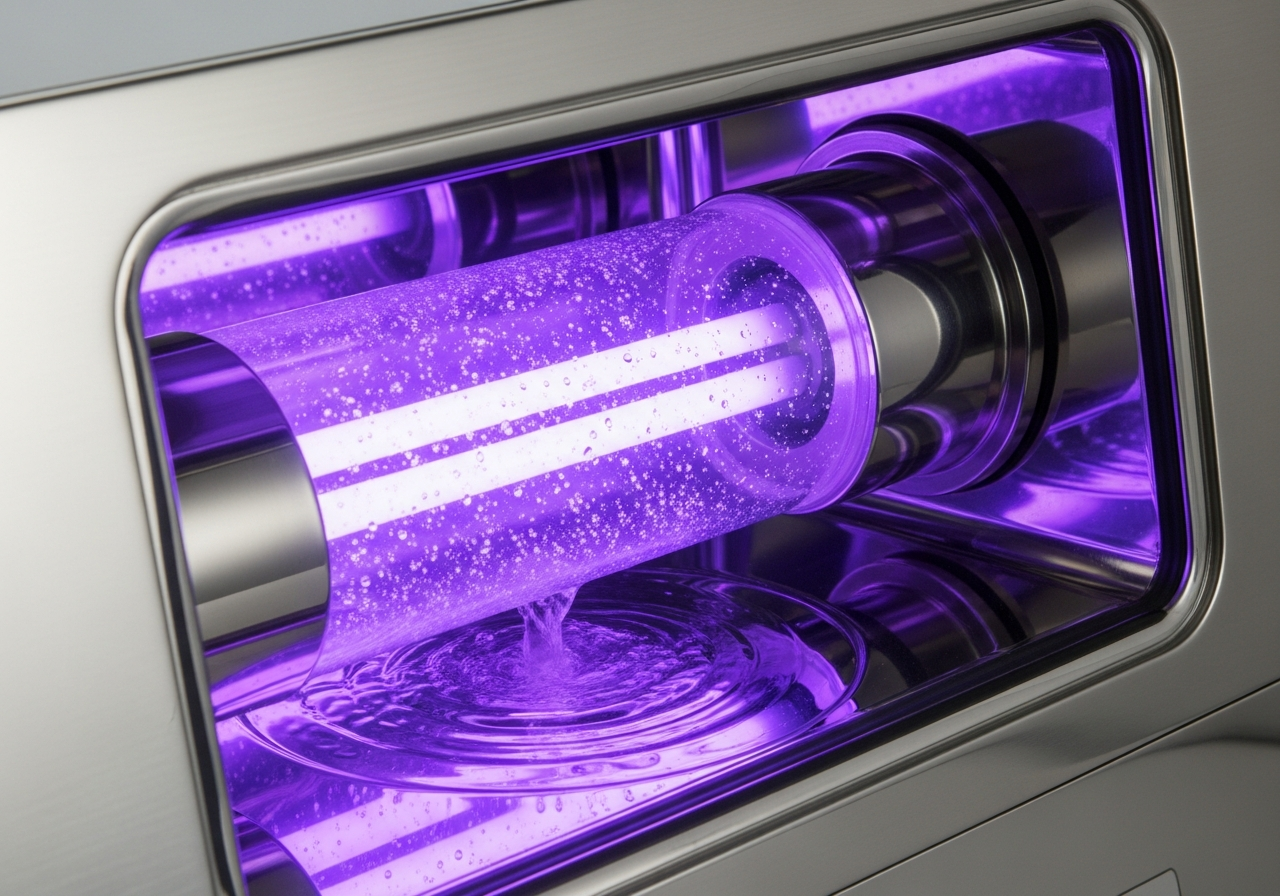
    A germicidal UV-C lamp inside a stainless chamber irradiates passing water.
    A germicidal UV-C lamp inside a stainless chamber irradiates passing water.

    Chemical-free by design

    Unlike chlorine, UV adds nothing to the water. There's no disinfection byproduct, no chemical aftertaste, and nothing to filter back out afterward. The light does its work in seconds as the water flows past, then the water continues on unchanged except for the microbes that are no longer viable. That makes UV an ideal final safeguard for drinking water.

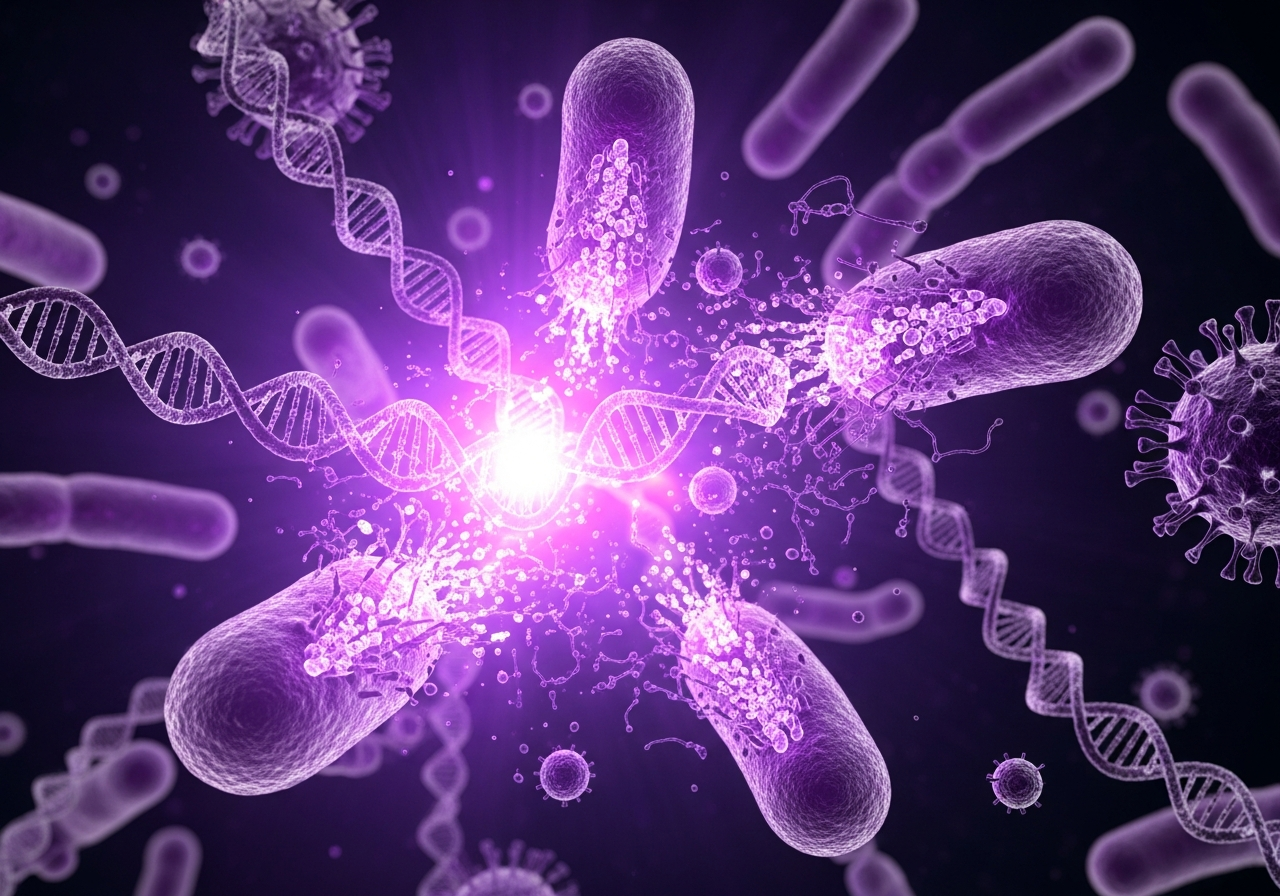
    UV-C light damages microbial DNA, leaving microorganisms unable to reproduce.
    UV-C light damages microbial DNA, leaving microorganisms unable to reproduce.

    At a Glance

    UV Wavelength
    254nm (germicidal)
    Inactivation
    99.99% of microbes
    Chemicals Added
    None
    Taste Impact
    None

    The Science Behind It

    UV disinfection of drinking water

    EPA / WHO water treatment guidance

    UV-C irradiation at ~254nm inactivates bacteria, viruses, and protozoa by damaging nucleic acids, without adding chemicals or forming disinfection byproducts.

    Germicidal dose response

    Photobiology literature

    Adequate UV dose achieves greater than 99.9% inactivation of common waterborne pathogens, with effectiveness dependent on water clarity and lamp intensity.

    Key Takeaways
    • UV-C at 254nm disables microbes by scrambling their genetic material.
    • It adds no chemicals and leaves no taste, odor, or byproducts.
    • Pairing UV with filtration covers both chemistry and biology for complete safety.
    WaterVo
    Pure Choices. Better Living.
    HU Trusted Supplier

    Once you know what's in your water, you need to do something about it. WaterVO is Hydrology University's recommended supplier for residential filtration systems, atmospheric water generators (AWG), and home hydration equipment vetted against our independent rating standards.

    Filtration systems Atmospheric water generators Whole-home solutions
    Visit WaterVO.com
    AdvertisementIndustry Sponsors

    Leading Water Technology & Treatment Companies

    Major manufacturers and service providers across water treatment, filtration, and infrastructure. Listings link directly to each company. Hydrology University reviews are editorially independent of these placements.

    Sponsored listings. Hydrology University may earn a fee from advertisers featured here. Listings are not endorsements and do not constitute legal, financial, or professional advice.

    Advertisement
    Best of the MarketplacesSee our top water picks on Amazon & Temu
    View Best Of
    Contact Us