Hurricane Helene Dropped Nearly a Fifth of a Year's Microplastics on One North Carolina Mountain Site, Study Finds
Hydrology University ·
- Current News
- Microplastics
- Storms
- Source Water
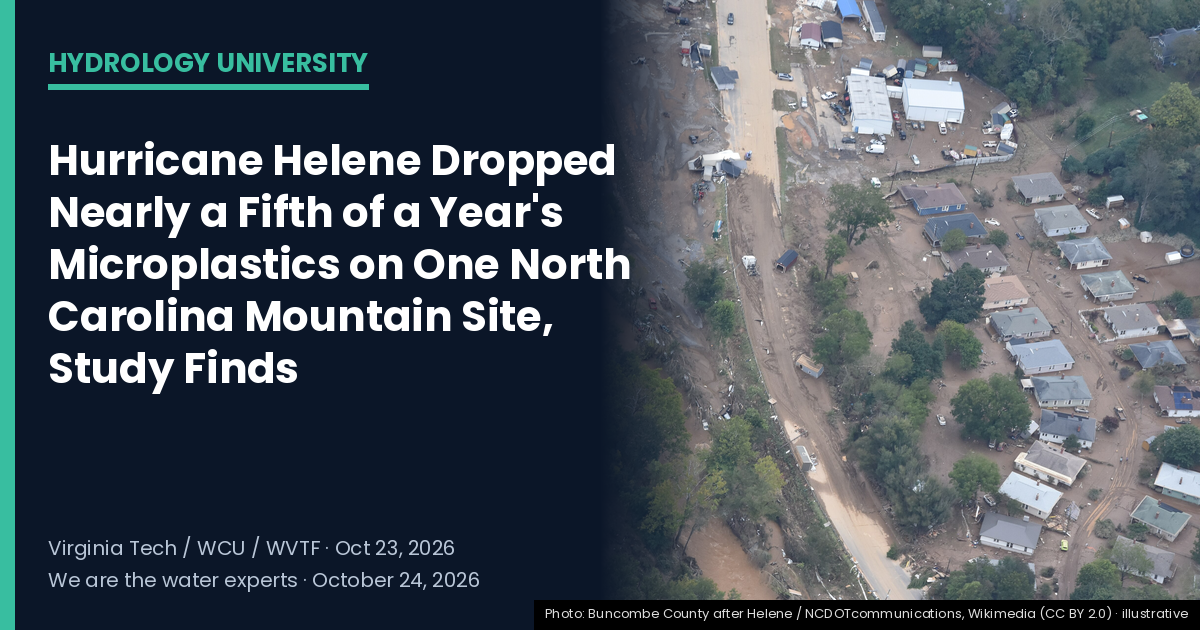
When Hurricane Helene hit the southern Appalachians on September 25, 2024, with 20 to 30 inches of rain, a team of scientists already had microplastic samplers running in western North Carolina. Their results show the storm dropped about 18.8% of a full year's atmospheric microplastic deposition at the Highlands Biological Station in just a few days, Virginia Tech reported. WVTF Radio IQ revisited the findings with the researchers on October 23, 2026.
We are the water experts. Here is what the team measured, what it does and does not tell us, and what it means for anyone who drinks from a stream-fed system or a private well.
What the samplers caught
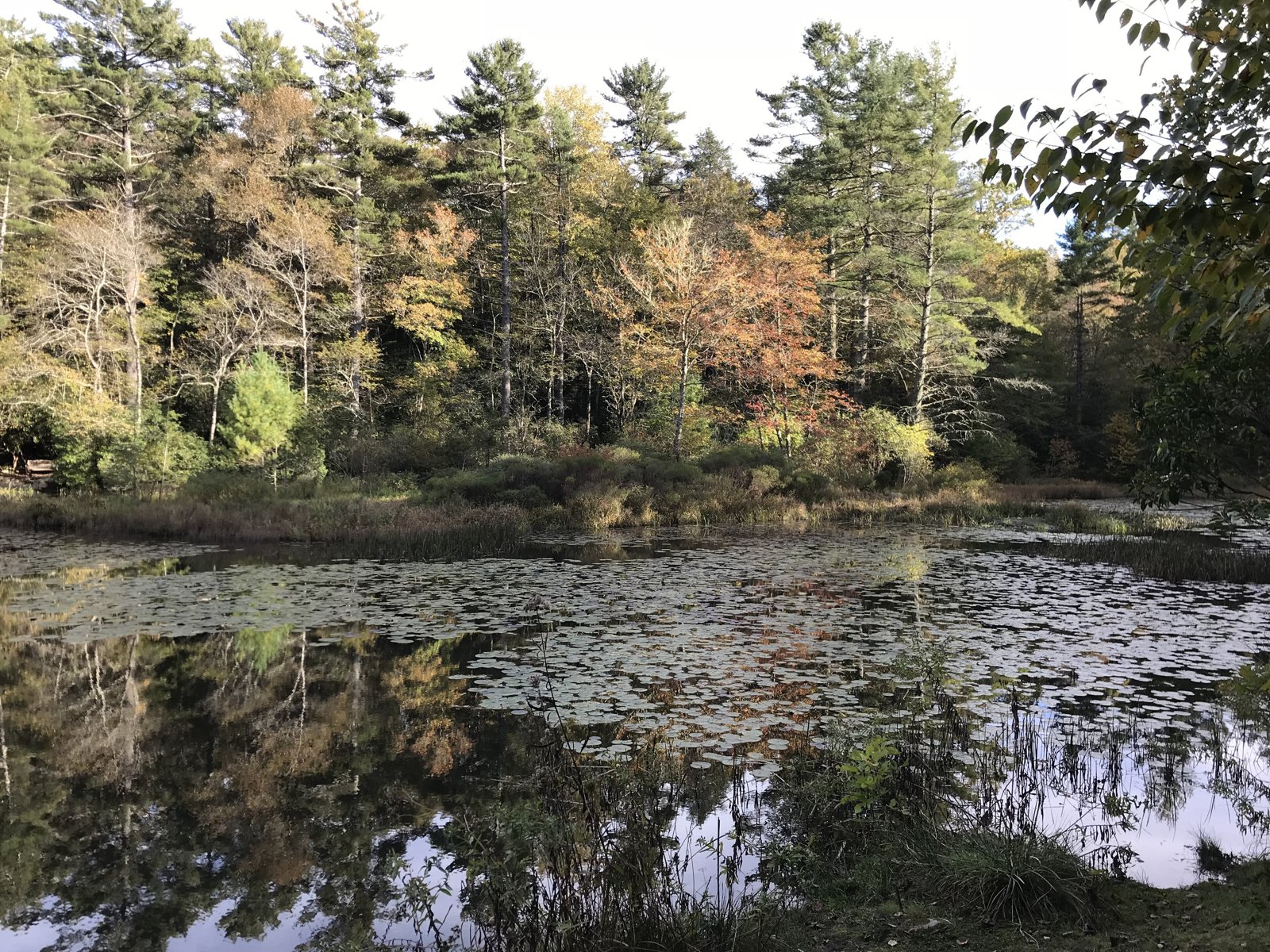 The Highlands Biological Station's botanical garden, one of the study's three sites. Photo: JTCostaHBS via Wikimedia Commons (CC BY-SA 4.0).
- Three sites, wet and dry. The team measured deposition at the Highlands Biological Station, Iron Duff in Haywood County and the Coweeta Hydrologic Laboratory in Macon County, separating particles that settled on dry days from those that came down with rain, according to Virginia Tech.
- Nearly a fifth of a year at Highlands. The storm accounted for 18.8% of the annual microplastic deposition at Highlands, 4.2% at Iron Duff and 4.6% at Coweeta. "At Highlands, during those days of the storm, we were getting a total of over 10,000 microplastics per square meter," Jason Love, associate director of the station, told WVTF, against roughly 55,000 per square meter for November 2023 to November 2024.
- Three to 22 times the usual rate. Atmospheric deposition was about 3 to 22 times higher during Helene than before the storm, Jerry Miller of Western Carolina University told WVTF.
- A first for the U.S. Virginia Tech says it is the first U.S. study to measure microplastic deposition before, during and after a hurricane. It was published in Integrated Environmental Assessment and Management.
Why the streams looked cleaner, but were not
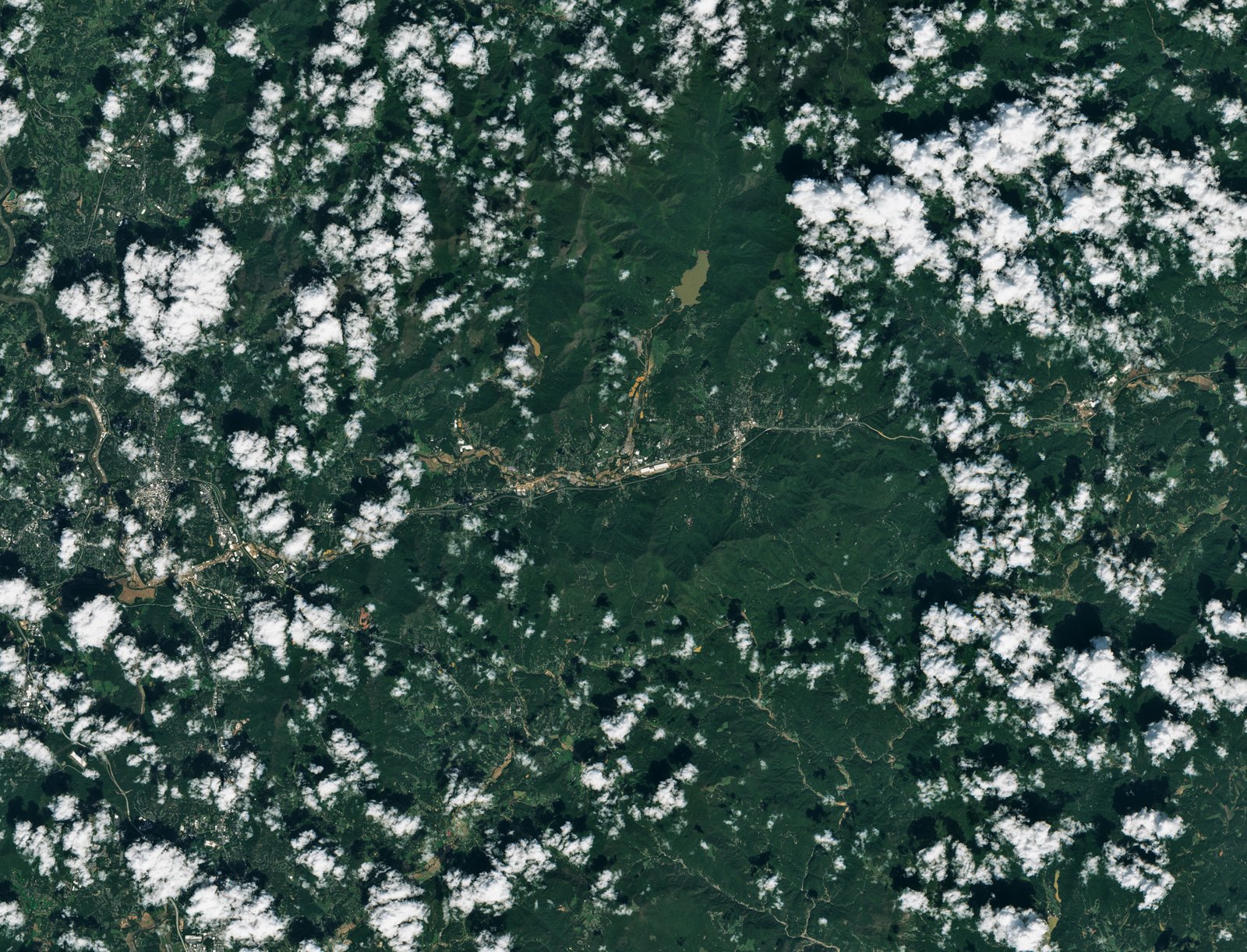 Flooding in western North Carolina after Helene, seen by satellite. Image: NASA Earth Observatory, using Landsat data from the U.S. Geological Survey and modified Copernicus Sentinel data (public domain).
Stream concentrations actually fell during the flood, Miller told WVTF, because so much water diluted what was there. The total moved downstream was another story. "On a typical flood event, we might find somewhere between 50 and a few hundred million particles that pass a point in the stream. During Helene, at one site, we got over 70 billion particles being moved downstream per hour," he said.
Even before the storm, small, 99%-forested headwater basins averaged around 10 particles per liter, Miller said, some of the highest concentrations measured globally. Small headwater streams make up more than 70% of total stream length in the continental U.S., Virginia Tech biologist Austin Gray said. "If it's happening in the headwaters, then it's going to flow downstream."
Dry-day deposition rose after the rain stopped, Virginia Tech reported. Gray told WVTF the researchers believe particles stuck to leaves and were later released by wind and leaf fall. Gray's team, working with Virginia Tech's Hosein Foroutan, estimated the storm put 385 quadrillion extra microplastic particles into the atmosphere above normal levels.
What this does and does not show
There are no regulatory limits for microplastic concentrations, even in drinking water, and they are not a pollutant the EPA is required to monitor in air, Love told WVTF. Health research so far shows associations, not cause and effect, and Gray said more research is needed. "This is just one study," he said. Gray also told WVTF the true amount was likely higher, because particles smaller than the team's methods could detect were not counted.
Love pointed to a clue in the samples: "We find a lot of blue fibers," he said, and blue is the most popular color in fashion. "This is a human caused problem."
What the water experts recommend
 Illustrative. Photo: 247homerescue via Wikimedia Commons (CC0).
- Know your source. If your water comes from a mountain stream, reservoir or shallow well, storms can change what reaches it. Your utility's annual Consumer Confidence Report lists the source.
- Private well? Test after flooding. Wells hit by floodwater should be tested by a certified lab before use. Ask the lab whether it can test for microplastics.
- Compare filters on evidence. Our reverse osmosis reviews and our microplastics guide explain what lab tests can and cannot show.
- Consider a different starting point. Some households also look at atmospheric water generation, which makes drinking water from humidity in the air rather than from streams or wells. It uses energy. Our sister brand WaterVO makes one.
- Cut the source. Fewer synthetic fibers in the wash and less single-use plastic mean less to blow around.
More from Hydrology University: Microplastics guide · UGA Extension on microplastics in wells and tap water · ASU-led team reports a palladium membrane that breaks down PFAS in lab tests
Sources
- Nick Gilmore, "Helene dumped massive amounts of microplastics on North Carolina; what does that mean for us all?," WVTF Radio IQ, October 23, 2026: wvtf.org
- Virginia Tech News, "Hurricane Helene deposited nearly one-fifth of annual microplastics at one North Carolina site," September 2026: news.vt.edu
- The study in Integrated Environmental Assessment and Management, 2026, as reported by Virginia Tech: doi.org
Photo: Damage after Hurricane Helene floods in Buncombe County, North Carolina, by NCDOTcommunications via Wikimedia Commons (CC BY 2.0); cropped, headline added in the featured image. Illustrative.
Page link: https://hydrologyuniversity.com/blog/hurricane-helene-microplastics-deposition-western-north-carolina