PFAS Treatment Funding in Pennsylvania: PENNVEST Grants Back New Systems at a School, Two Aqua Wells and a Bucks County Township
Hydrology University ·
- Current News
- PFAS
- Water Treatment
- Funding
Pennsylvania's water infrastructure bank approved $190.3 million for 24 drinking water, wastewater and non-point source projects in 19 counties on October 21, 2026, and several of the drinking water grants pay for PFAS treatment where, according to the state, PFOA and PFOS levels at the entry point to the drinking water system currently exceed the U.S. EPA's limits. The awards come through the Pennsylvania Infrastructure Investment Authority (PENNVEST), Gov. Josh Shapiro's office said.
We are the water experts. Here is where the PFAS money is going, what kind of treatment each project uses, and what it means for anyone reading their own water report.
The PFAS projects on the list
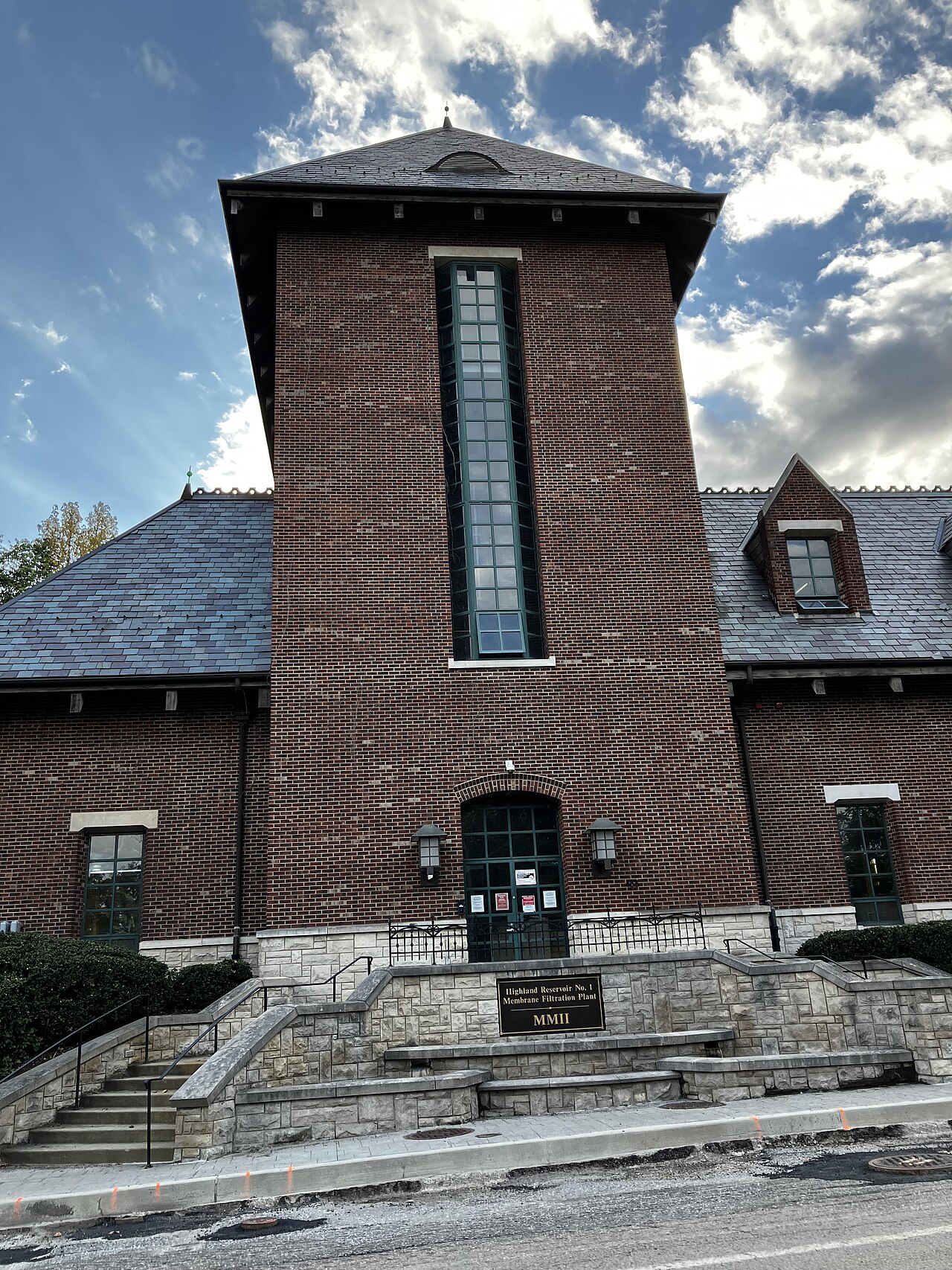 Illustrative: a Pennsylvania drinking water treatment plant (Pittsburgh's Highland Park Reservoir No. 1 membrane filtration plant), not one of the funded projects. Photo: Designism via Wikimedia Commons (CC0).
- Buckingham Township, Bucks County: $3,120,000 grant. An anion exchange resin treatment system at the Cold Spring booster station, where water from wells 1 and 2 is processed, plus a new adjoining building to house the PFAS treatment vessels, according to the state's project summary.
- Plumstead Township, Bucks County: $3,891,000 grant. About 5,400 feet of 12-inch water main to connect and consolidate the Summer Hill/Summer Meadow and Patriots Ridge/Carriage Hill systems. The state says the project is meant to address PFAS contamination identified in some of the wells, along with pressure and fire-protection issues.
- Aqua Pennsylvania, Culbertson Run well station, Chester County: $2,546,000 grant. A new treatment building with one ion exchange vessel train (two vessels in a lead-lag configuration) and pre-filtration for the Culbertson Run and Cross Keys wells, at a combined 75 gallons per minute, plus about 3,050 feet of new raw water pipeline, the state says.
- Lakeland School District, Lackawanna County: $352,000 grant. A 25-gallon-per-minute system in the school building's basement, with one granular activated carbon vessel for total organic carbon and two ion exchange vessels for PFAS. The district's water system serves about 1,000 students and faculty at the Lakeland Junior and Senior High Schools, according to the state.
- Aqua Pennsylvania, Turnbury Well 11, Montgomery County: $1,720,000 grant. One train of two granular activated carbon vessels in lead-lag formation, and a well pump upgrade to handle the added head loss, the state says.
By our count of the state's list, the four treatment-system grants (Buckingham, the two Aqua sites and Lakeland) add up to about $7.7 million.
Meeting the state rule vs. the federal rule
 U.S. EPA headquarters, Washington, D.C. Photo: Moreau1 via Wikimedia Commons (public domain).
Aqua Pennsylvania said in its own October 21 release that the two well projects total nearly $4.3 million in PENNVEST funding, will affect nearly 725 customers, and are expected to be finished by the end of 2027. Aqua said it is already in full compliance with the Pennsylvania Department of Environmental Protection's PFAS drinking water standards, and that the additional treatment is needed to comply with the EPA's standard.
That federal standard is an enforceable limit of 4.0 parts per trillion each for PFOA and PFOS, set in April 2024. On May 18, 2026, the EPA proposed keeping those two limits while giving eligible systems the option of two more years, to 2031, to comply, the agency says.
"Every Pennsylvanian has a constitutional right to clean water," Shapiro said in the release. The state says its administration has put more than $4.9 billion into water projects through PENNVEST since he took office.
What the water experts recommend
 Illustrative. Photo: 247homerescue via Wikimedia Commons (CC0).
- Read your water report. Community water systems publish an annual Consumer Confidence Report. Look for PFOA and PFOS results and compare them with the 4.0 ppt federal limit.
- Schools can be their own water systems. The EPA counts a school that operates its own drinking water system as a public water system; Lakeland's grant is for treatment on its existing system. Parents can ask the district for its PFAS results.
- Private well? No one tests it but you. Private wells are not covered by these rules. Use a certified lab that tests for PFAS.
- Weighing your drinking-water options? Treatment plants like these work on water that already carries PFAS. Atmospheric water generation, which we call vapor optimizing (VO), makes drinking water from humidity in the air instead of from ground or surface water. We believe VO is likely the best option for drinking water. It uses energy, but we think cleaner drinking water is worth it.
More from Hydrology University: PFAS guide · ASU-led team reports a palladium membrane that breaks down PFAS in lab tests · UGA Extension on microplastics in wells and tap water
Sources
- Pennsylvania Infrastructure Investment Authority (PENNVEST), "PENNVEST Invests $190.3 Million in Water Infrastructure Projects in 19 Counties," October 21, 2026: pa.gov
- Office of Gov. Josh Shapiro, "Shapiro Admin Invests $190.3 Million to Ensure Clean Water and Infrastructure," October 21, 2026: pa.gov
- Aqua Pennsylvania, "Aqua Pennsylvania Wins Nearly $15.3 Million in PENNVEST Funding for PFAS Removal, Wastewater Treatment Plant Upgrade," October 21, 2026: aquawater.com
- U.S. EPA, "Per- and Polyfluoroalkyl Substances (PFAS)" drinking water rule page (read Oct. 22, 2026): epa.gov
- U.S. EPA, "Data Summary of the Fifth Unregulated Contaminant Monitoring Rule (UCMR 5)," July 2026 (public water system definitions): epa.gov
Photo: The Pennsylvania State Capitol in Harrisburg in fall, by Governor Tom Wolf via Wikimedia Commons (CC BY 2.0); cropped, headline added in the featured image. Illustrative.