Practical Use — Real-World Daily Drinking, Not Lab Perfection
A 5-star material has to be safe, durable, and livable.
A material that is theoretically perfect but breaks the moment you drop it, weighs three pounds, costs $300, or is impossible to clean is not actually a 5-star material — it's a museum piece. Hydrology University ratings are built around how a material performs in real homes, kitchens, hikes, gyms, and offices.
Visualizing the Dimension
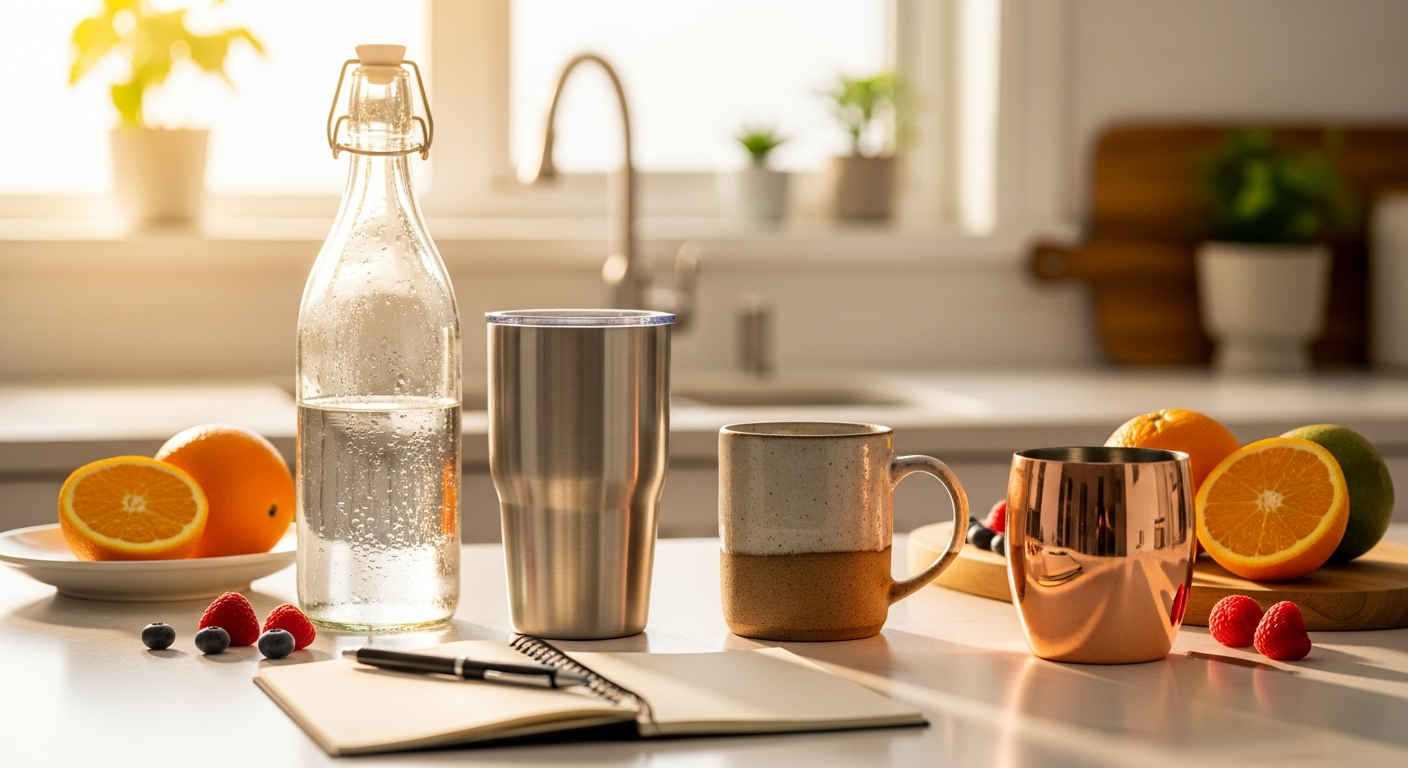
Drinkware in the wild: glass, stainless, ceramic, copper — the daily reality our ratings are calibrated for.
Why It Matters
Drinkware that doesn't get used doesn't protect anyone. The most common chemistry mistake is choosing a 'safe' material that's so impractical it gets replaced by the convenient (and worse) option a week later. Practical use is where chemistry meets human behavior — and where Hydrology University ratings differ from a pure-toxicology score.
Weight & ergonomics: can you carry it on a hike, fit it in a cup holder, hold it for an hour?
3
Cleanability: smooth interior, no narrow necks that hide biofilm, dishwasher-compatible.
4
Cost-per-year: a $40 stainless bottle that lasts 10 years beats a $5 plastic bottle replaced every 6 months.
5
Temperature performance: insulated vs. uninsulated, hot drinks vs. cold drinks vs. room-temperature water.
Deep Dive
Why durability is a safety feature
Every scratch, dent, and crack changes a material's chemistry. Stainless steel with a damaged passive layer corrodes locally. Plastic with a scuffed interior sheds more microplastics. Glass with chips becomes a cut hazard. Practical durability isn't separate from the safety rating — it's part of it.
The drinkware that lives on your counter — not the pristine showroom sample — is what we rate.
Cost-per-year matters more than sticker price
An $8 plastic bottle replaced every 4 months costs $24/year and shed microplastics into your drink the whole time. A $40 insulated stainless steel bottle lasts a decade — $4/year of true cost, with vanishingly small chemical migration. Glass falls in between: zero migration, but real breakage risk depending on lifestyle.
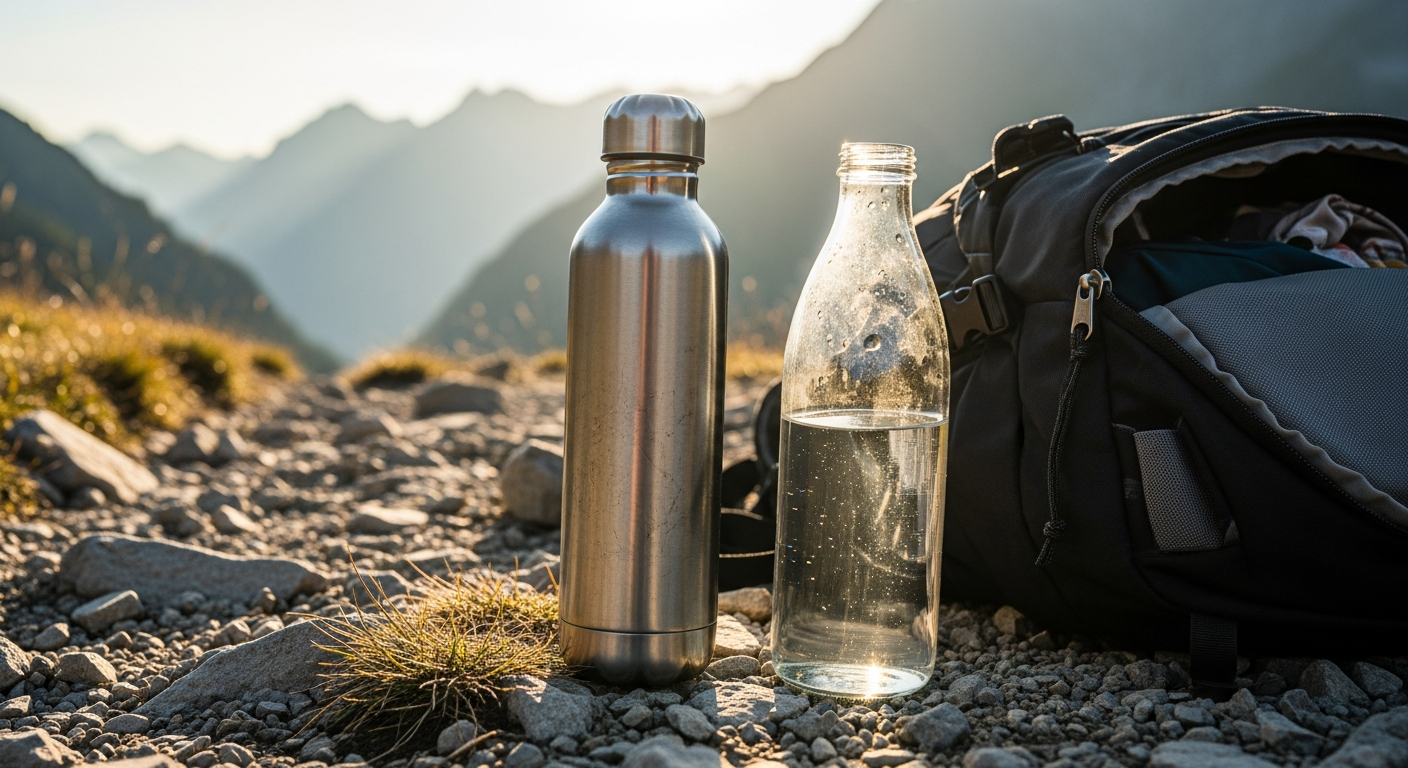
The right choice depends on your life — kitchen counter vs. trail vs. office vs. car.
Cleanability is hidden chemistry
Anything that lives wet for hours grows biofilm. Narrow-mouth bottles, soft silicone straws, and sliding lid mechanisms all create cleanability dead zones. Smooth, wide-mouth designs in dishwasher-safe materials win the practical-use rating not for their looks but because they actually stay clean.