Cayce, S.C., Stays in National PFAS Lawsuit as Four More Companies Are Named, Setting Settlement Money Aside for Treatment
Hydrology University ·
- Current News
- PFAS
- Policy
- Testing
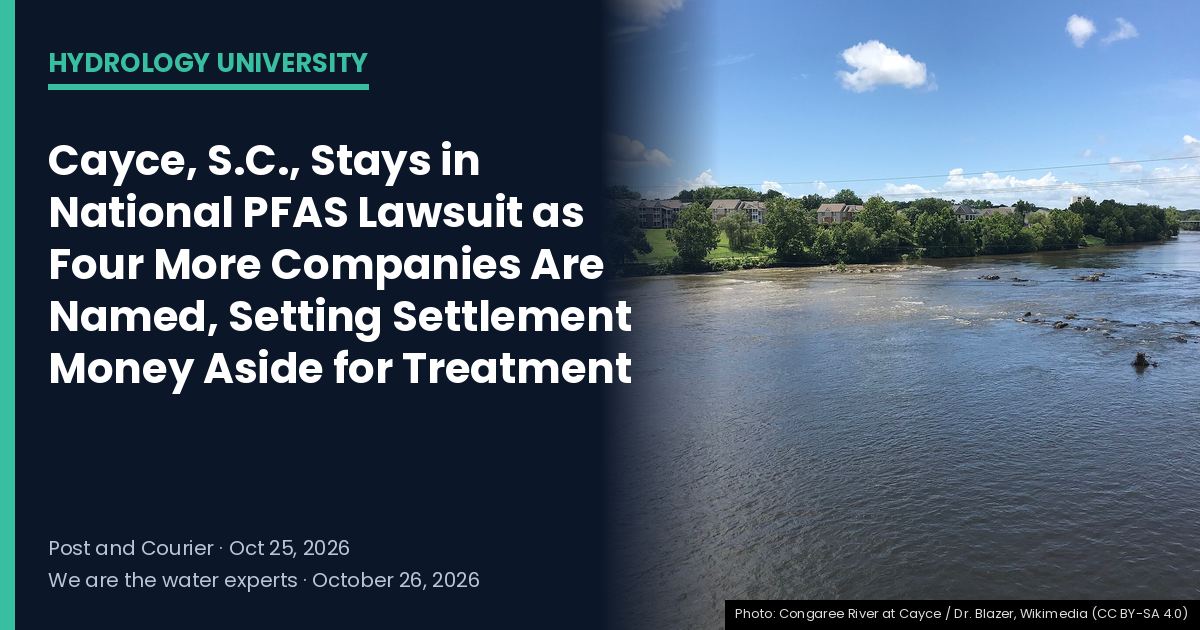
The city of Cayce, South Carolina, will stay in a nationwide lawsuit against makers of PFAS, the "forever chemicals," after four more companies were added as defendants, the Post and Courier reported on October 25, 2026. City Council voted at its October 21 meeting to remain in the case, which now also names Amerex Corporation, Archroma U.S. Inc., Carrier Corporation and Nation Ford Chemical.
We are the water experts. Here is what Cayce decided, where the money is going and what it means for your own tap.
What Cayce decided
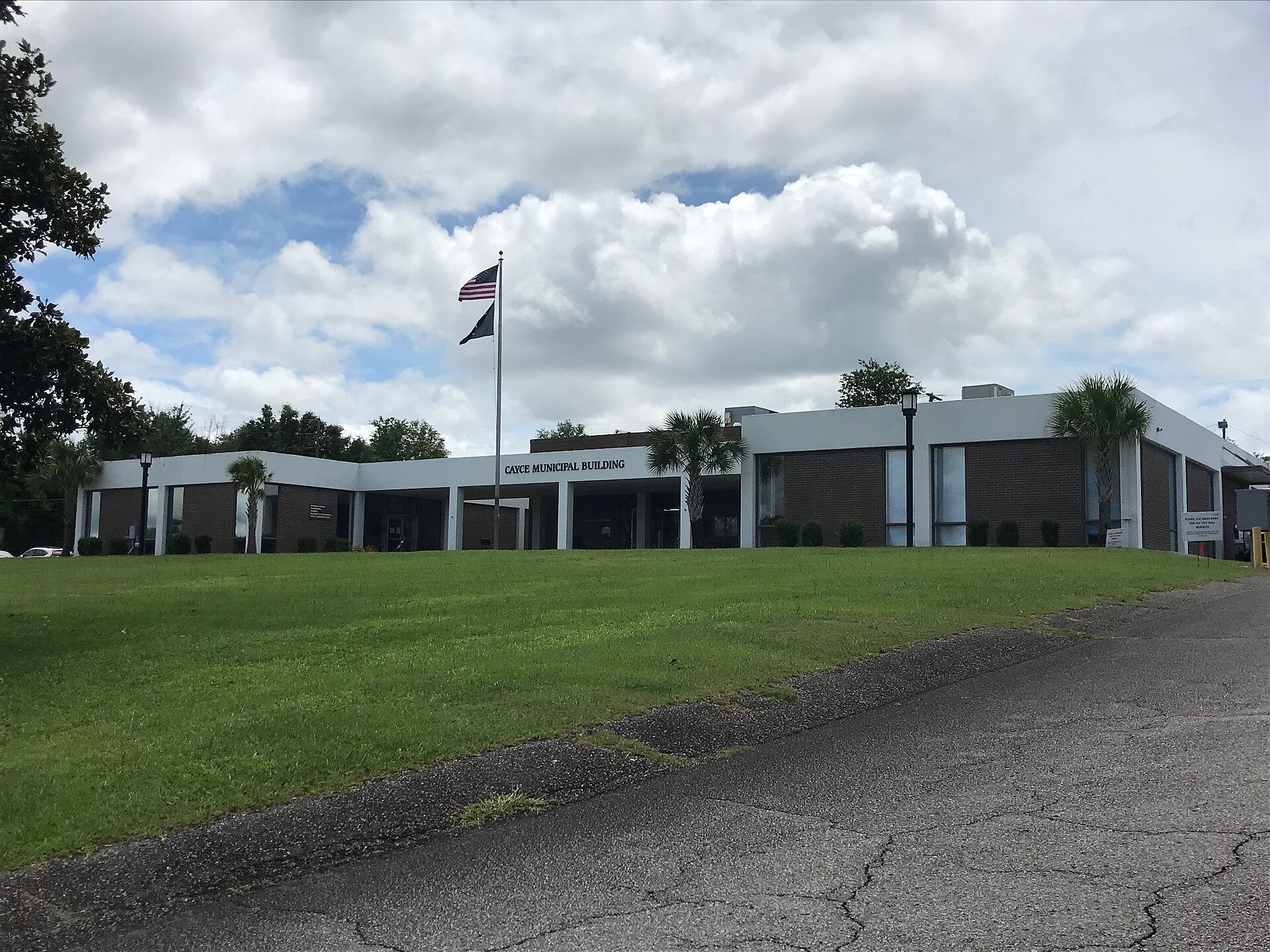 Cayce City Hall. Photo: Dr. Blazer via Wikimedia Commons (CC BY-SA 4.0).
- A bigger case. The lawsuit, originally filed in 2024 through the federal court in Charleston, named 3M and DuPont as defendants and alleges the companies contributed to PFAS contaminating the water systems of nearly 11,000 municipal water systems nationwide, according to the paper.
- An early joiner. Mayor Elise Partin said Cayce was one of the first to join the class action. "We have really been in front of this," she said.
- No final number yet. It is unclear how much Cayce will receive from a final settlement. A city spokesperson said the total will depend on factors such as how many other cities and companies join.
Where the money is going
- About $1.8 million so far. Cayce has received approximately $1.8 million in payouts, the Post and Courier reported. Partin said that money and all future settlement money is set aside in an account for PFAS treatment.
- A $600,000 treatment study. Last December, the council voted to spend $600,000 on consultant American Engineering to study what treatment will look like. A city spokesperson said that money came from a grant.
- Next door, a bigger bill. Across the river, Columbia filed its own lawsuit in 2024. At that time, Columbia Water's Clint Shealy told the city council decontamination would cost $150 million, the paper reported.
"It's not huge, but (the settlement) is helpful, at least a little bit, because it means that we get some funds that we can start stockpiling to then figure out what in the world we do to treat it. Because no one knows," Partin said.
Why testing matters
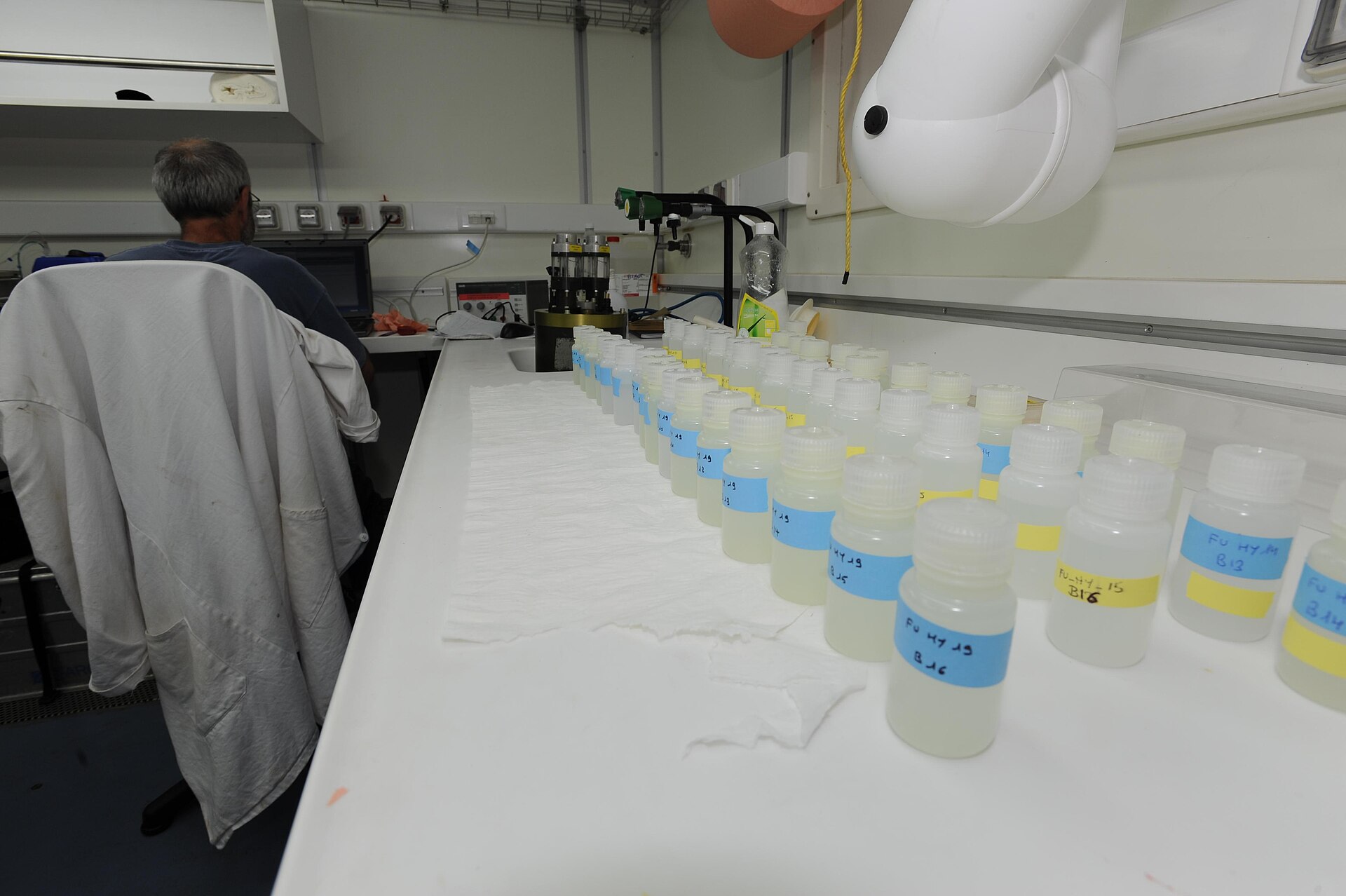 Illustrative. Water samples awaiting lab analysis. Photo: Stéphane Lesbats, Ifremer, via Wikimedia Commons (CC BY 4.0).
PFAS do not change the taste, smell or color of water, so sampling is the only way to know whether they are present, the Post and Courier noted. The paper also reported that PFAS have been detected at high levels in some private drinking wells in South Carolina's Midlands and other parts of the state. Private wells are not covered by utility testing, so the owner is responsible for testing.
What the water experts recommend
 Illustrative. Photo: Fourteenzerozero via Wikimedia Commons (CC0).
- Read your utility's report. If you are on city water, start with your utility's annual Consumer Confidence Report, which lists what was tested and found.
- Test a private well. If you are on a well, use a certified lab that tests for PFAS.
- Match the filter to the job. Start with our PFAS guide, and see our reverse osmosis reviews for specific systems. Replace home filter cartridges on the maker's schedule.
- Consider a different starting point. Some households also look at atmospheric water generation, which makes drinking water from humidity in the air rather than from streams or wells. It uses energy. Our sister brand WaterVO makes one.
More from Hydrology University: PFAS guide · Luleå thesis: PFAS treatment depends on the water · San Jose Water's planned ion-exchange PFAS plant
Sources
- Chloe Barlow, "Cayce names more companies in forever chemicals lawsuit," Post and Courier, October 25, 2026: postandcourier.com
Photo: Lexington County (Cayce) from the banks of the Congaree River, by Dr. Blazer via Wikimedia Commons (CC BY-SA 4.0); cropped, headline added in the featured image.
Page link: https://hydrologyuniversity.com/blog/cayce-sc-pfas-lawsuit-four-new-defendants-treatment-fund