What a TDS Meter Can and Can't Tell You About Your RO System
Hydrology University ·
- Buying Guide
- Reverse Osmosis
- Water Testing
- Drinking Water
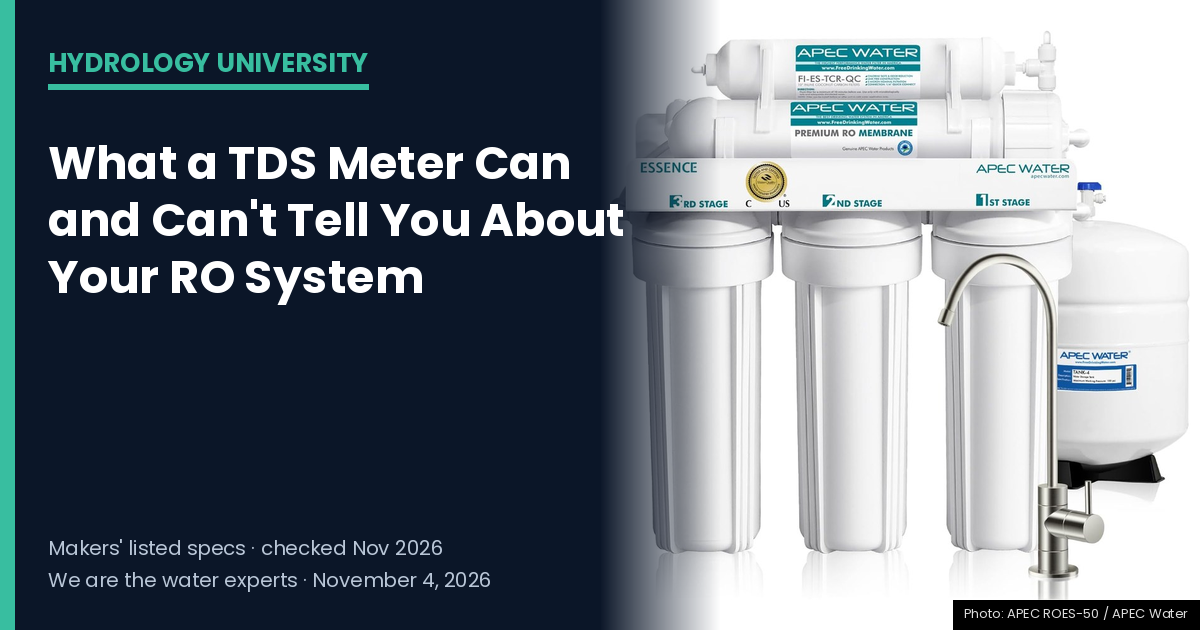
A reverse osmosis (RO) system works out of sight under the sink, so most owners have no idea when it starts to slip. A pocket TDS meter is one of the cheapest ways to keep an eye on it. Here is what the number means, what it cannot tell you, and how to use it, with the HM Digital TDS-EZ and the APEC ROES-50 as examples. Hydrology University did not lab-test either product.
What a TDS meter measures
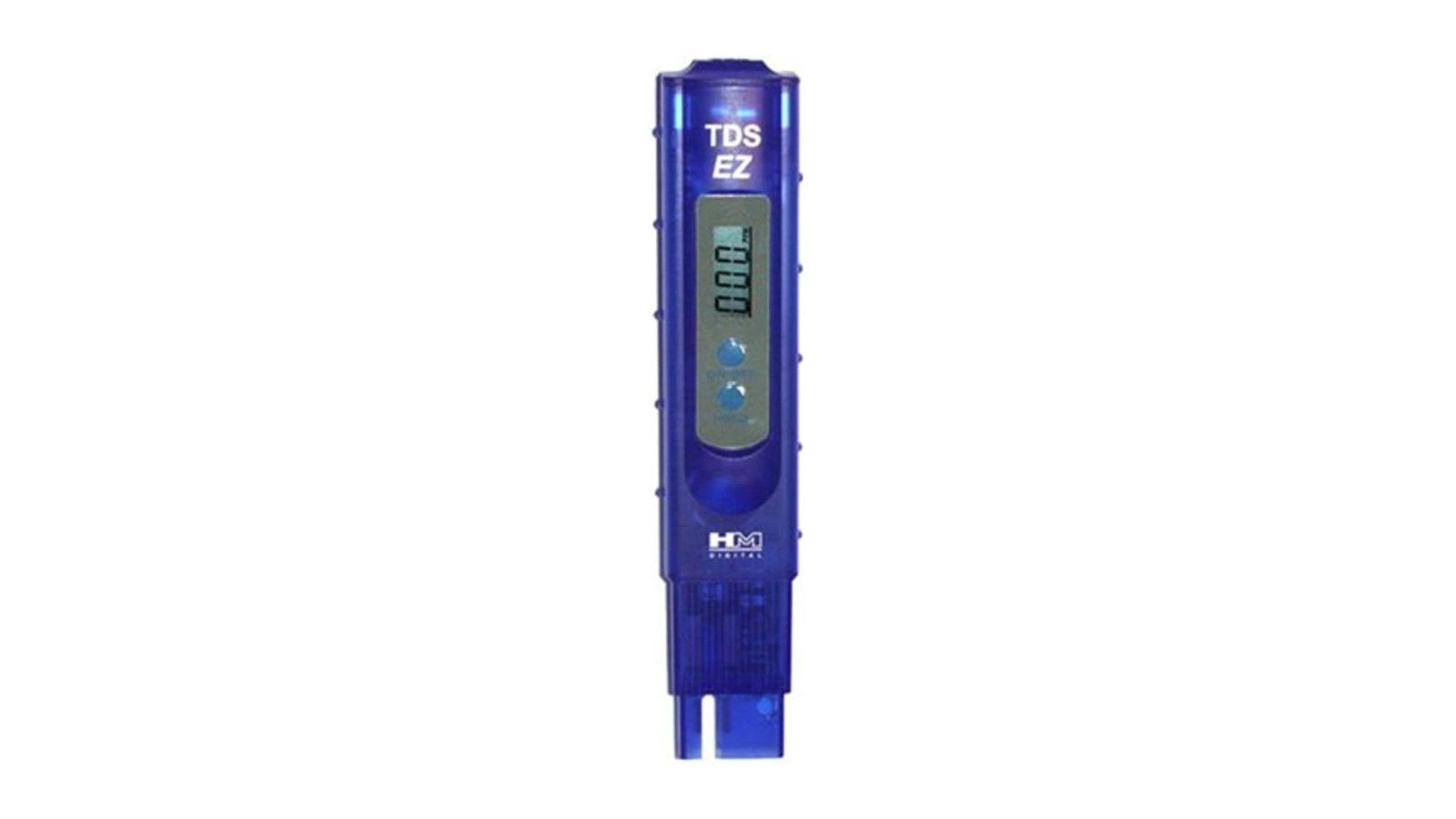
TDS means total dissolved solids: the minerals, salts and other matter dissolved in water, shown in parts per million (ppm). The meter infers it from how well the water conducts electricity. HM Digital lists the TDS-EZ with:
- A range of 0 to 9,990 ppm
- Accuracy of plus or minus 2%
- Two LR44 batteries
What it cannot tell you
A TDS reading is one number for everything dissolved. It does not identify specific contaminants such as lead, PFAS or bacteria, and it is not a lab test. A low reading does not prove water is safe, and a higher reading does not prove it is unsafe. For specific contaminants, use a certified lab. Our PFAS guide explains how to start.
How to use it with an RO system
The useful number is the trend. Measure your tap water and your RO faucet water on the same day, then repeat every few weeks:
- Compare tap and RO. A simple way to compare: rejection % = (1 − RO reading ÷ tap reading) × 100.
- Write it down. A steady rise in the RO reading over several weeks is an early warning that the filters or membrane may need replacing.
- Follow the maker's schedule anyway. A meter is a check, not a replacement for the filter schedule in the manual.
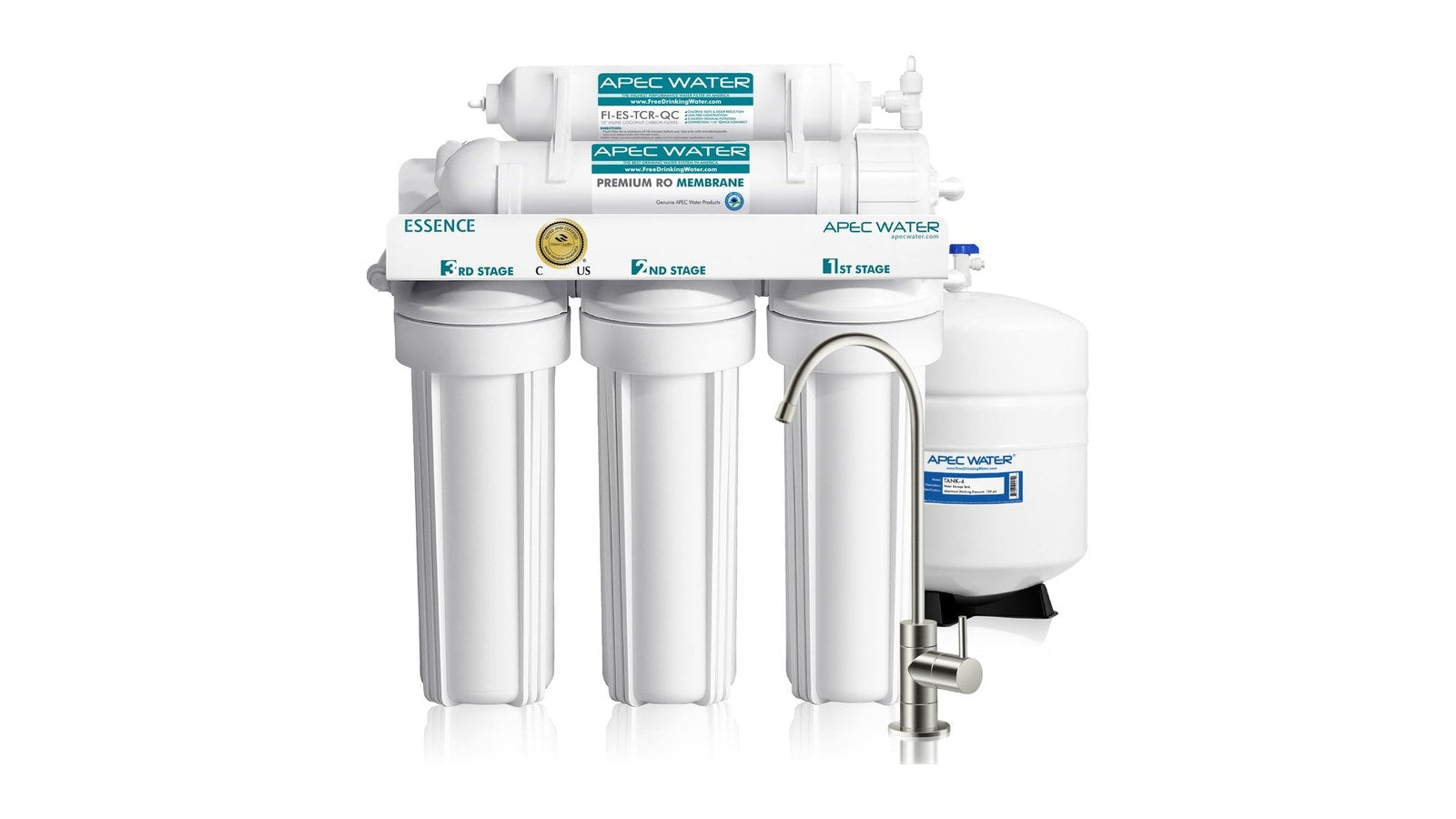
APEC lists the ROES-50 as a 5-stage system rated at 50 gallons per day, with a 4-gallon pressurized tank, no electricity needed, a 4:1 drain ratio, a 1-year warranty with lifetime support, and Made in USA labeling. Our full notes: APEC ROES-50 review. Check today's price on Amazon: APEC ROES-50 on Amazon (paid link).
For the meter: HM Digital TDS-EZ on Amazon (paid link). Our notes: HM Digital TDS-EZ review.
What the water experts recommend
- Test first, then choose. Know what is in your water before you pick a system.
- Use the meter for trends. One reading tells you little; a log over months tells you when to look closer.
- Compare more systems in our reverse osmosis reviews.
- Consider a different starting point. Atmospheric water generators such as the WaterVO Spout Monolith make drinking water from humidity in the air instead of starting from the tap.
Sources
- HM Digital, TDS-EZ product listing, as recorded in Hydrology University's HM Digital TDS-EZ review.
- APEC Water, ROES-50 product listing, as recorded in Hydrology University's APEC ROES-50 review.
Disclosure: Hydrology University may earn a commission on purchases made through links marked (paid link), at no extra cost to you. As an Amazon Associate we earn from qualifying purchases.
Page link: https://hydrologyuniversity.com/blog/tds-meter-ro-system-what-it-can-and-cant-tell-you