PFAS Testing for Private Wells: Wisconsin Launches Home Sample Kits and Community Sampling Grants From $125 Million Trust Fund
Hydrology University ·
- Current News
- PFAS
- Private Wells
- Water Testing
Private well owners in Wisconsin can now apply to test their water for PFAS through a new state program, one of two grant programs Gov. Tony Evers and the Wisconsin Department of Natural Resources (DNR) announced on October 20, 2026. Both are funded by the state's $125 million PFAS Trust Fund, which the governor's office says sat unspent for years until 2025 Wisconsin Acts 200 and 201 released it earlier this year.
We are the water experts. Here is what the two programs do, who can use them, and what a private well owner can take from this.
The two programs
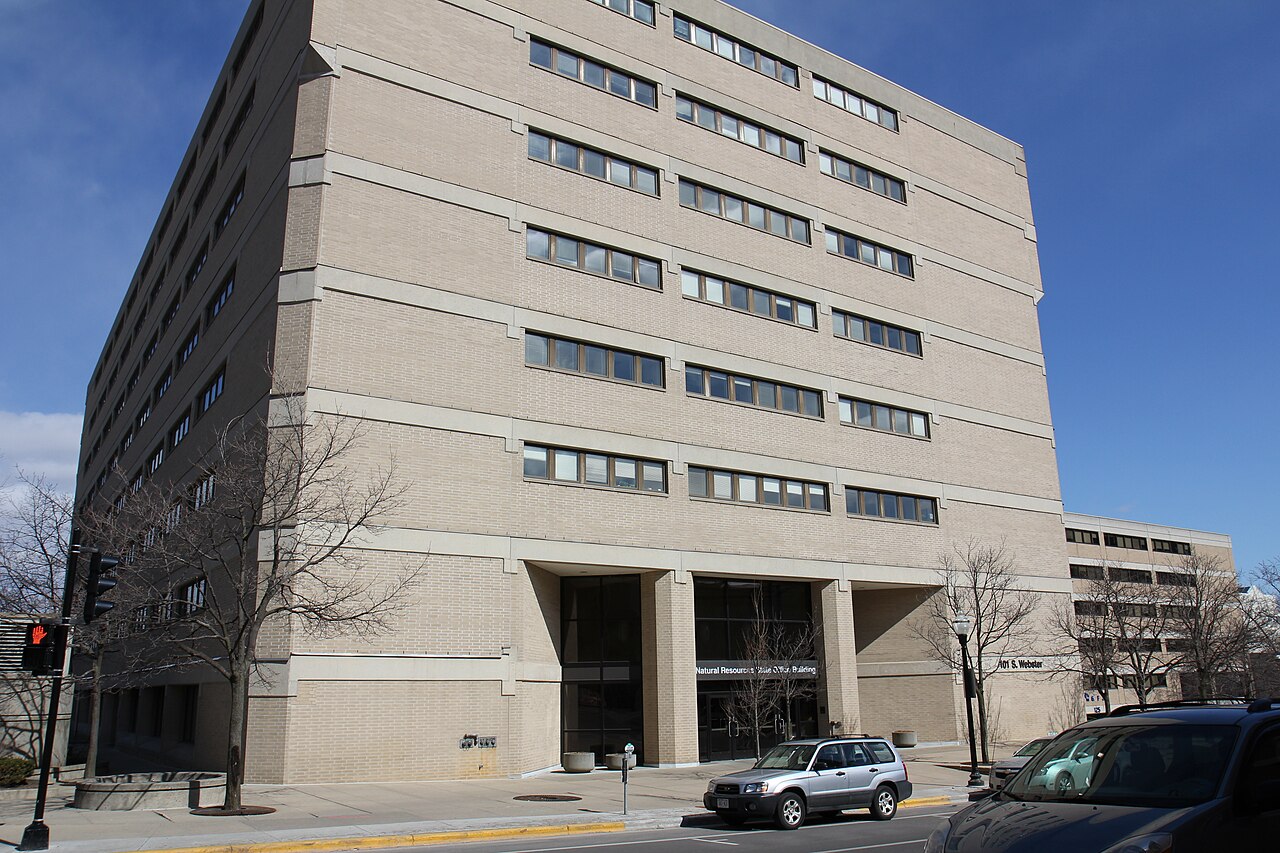 The Wisconsin DNR building in Madison. Photo: Royalbroil via Wikimedia Commons (CC BY-SA 3.0).
- PFAS Community Grants Sampling Program. Gives eligible municipalities money to sample for PFAS in private wells, in public water supplies at eligible schools and child care facilities, and in wastewater and other eligible materials at treatment plants, according to the governor's office. "Municipalities" is defined broadly: counties, cities, villages, towns, Tribal governing bodies, utility or sewerage districts, lake protection districts and technical college districts. The DNR will take applications for the first cycle, Cycle A, for about six months, with later cycles for communities that need more time.
- Wisconsin PFAS Private Well Testing Program (WisPPWT). For private well owners and users who do not live in a municipality pursuing a community grant. Once eligibility is confirmed, the Wisconsin State Laboratory of Hygiene (WSLH) ships a home sample kit; the owner collects a water sample and mails it back with a prepaid label, the governor's office says.
Who qualifies for a home kit
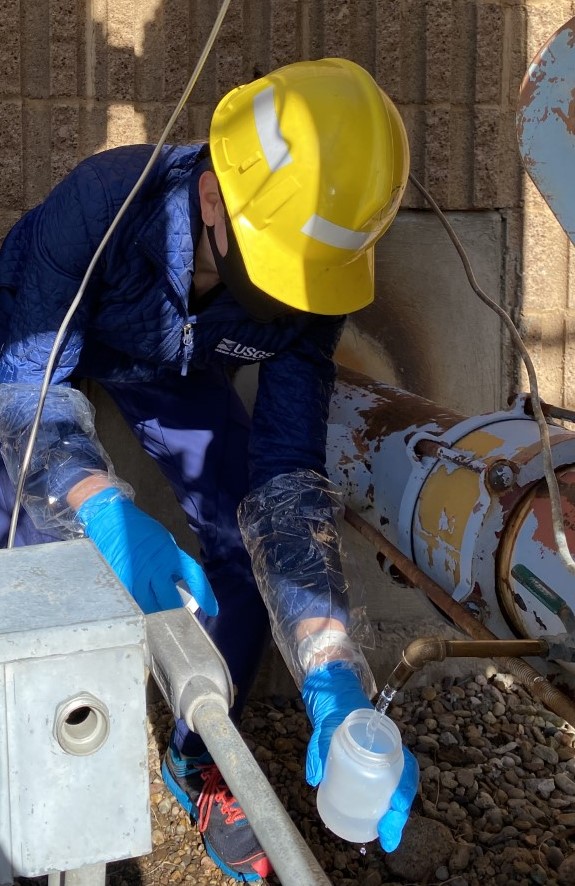 Illustrative: a USGS PFAS groundwater sampling in New Mexico, not the Wisconsin program. Photo: U.S. Geological Survey via Wikimedia Commons (public domain).
According to a DNR fact sheet, a well owner or user can apply to WisPPWT if:
- the well has not previously been sampled for PFAS by the DNR;
- the well is not being sampled through the Community Grants Sampling Program; and
- the well serves only a residence, not a business.
Eligible applicants may receive the kit "at no cost," the fact sheet says, after filling out an online application. Because funding is limited, the DNR and the governor's office encourage well owners to contact their local officials first about any community-based sampling plans.
The money behind it
 The Wisconsin State Assembly chamber, Madison. Photo: Royalbroil via Wikimedia Commons (CC BY-SA 3.0).
- $79 million for community-based programs in Acts 200 and 201 funds the Community Grants program, and a $10 million allocation funds WisPPWT, according to the governor's office.
- Acts 200 and 201 also added $35 million to the state's Well Compensation Grant Program and expanded eligibility. Private well owners or users who find PFAS through either new program may be able to apply there for help to install a treatment system, build a new well or connect to a public water supply, the governor's office says.
- More grants are on the way: sampling grants for irrigation wells, agriculture and landfill leachate, plus PFAS funding for public airports, are expected in 2027.
"These programs will have lasting impact on communities and private well owners across the state," Evers said. DNR Secretary Karen Hyun said, "We wanted these programs to efficiently support municipalities pursuing funding."
The governor's office also noted that changes approved in March lowered Wisconsin's drinking water threshold for PFOA and PFOS contamination from 70 parts per trillion to an enforceable 4.0 ppt, and the Oct. 20 release said the DNR's Natural Resources Board is slated to vote "next week" on a proposed rule to set groundwater standards for PFAS.
What the water experts recommend
 Illustrative. Photo: Stilfehler via Wikimedia Commons (CC0).
- Private well? You are your own utility. Public systems must test; private wells usually are not tested unless the owner does it. If you are in Wisconsin, check with your town or county first, then see whether WisPPWT fits.
- Outside Wisconsin? Ask your state environmental or health agency about well-testing programs, and use a certified lab that tests for PFAS.
- Read results against a standard. Compare any PFAS result with your state's limit and the EPA's, and keep the report with your well records.
- Weighing your drinking-water options? Atmospheric water generation makes drinking water from humidity in the air rather than from ground or surface water. Some households look at it alongside certified filtration while well testing and treatment funding roll out.
More from Hydrology University: PFAS guide · UGA Extension on microplastics in wells and tap water · Navy to connect Whidbey Island building to city water after PFAS found in private well
Sources
- Office of the Governor of Wisconsin, "Gov. Evers, DNR Announce Launch of Two New Grant Programs to Ensure Safe, Clean Drinking Water Statewide," October 20, 2026: content.govdelivery.com
- Wisconsin DNR, "Wisconsin PFAS Private Well Testing Program (WisPPWT)" fact sheet: dnr.wisconsin.gov
- Lindsay Strom, "DNR, Gov. Evers announce launch of grant programs to ensure safe, clean drinking water statewide," WEAU 13 News, October 20, 2026: weau.com
- Wisconsin DNR, PFAS Law Implementation: dnr.wisconsin.gov
Photo: The Wisconsin State Capitol in Madison, by Michael Barera via Wikimedia Commons (CC BY-SA 4.0); cropped, headline added in the featured image. Illustrative.